Showing posts with label Hi Rez Digital Player. Show all posts

July 26, 2023

Eversolo DMP

The name Eversolo sounds like this is the one. Its a good name for Android media player. That is right, this is an Android media player by the famous Zidoo (China) in some of the highest end Android player today which cost over RM10,000 being the top of the line (Zidoo Alpha) which is well known in the home theater world. With success of Zidoo in the home theater segment, the company is venturing into the stereo world. Eversolo is not new in the line of Zidoo's product line up. It started of with the Eversolo Z6 and Z8 DAC which is quite a hit in the market. With the success of their DAC, it comes with the latest product of DMP A6 which is a streamer and media player (audio only). 


It comes with 2 different edition or models. The standard edition and the master edition.


Standard Edition

                                                                           Master Edition


The difference of the unit other than the gold batch in front of the master edition, is the internal clock of master edition is upgraded version . Two accusilicon femtosecond oscillator. The op amps is also upgraded to OPA1612. In simple summary the upgrade reduce noise and with low distortion. 


The video of unboxing is the standard edition. In terms of packaging, both standard and master have the same boxing. The box itself is pretty good looking. Inside of the box packing is definitely top notch and the player itself wrap within a beg. Out of the beg the unit itself is aluminium chassis. Well build of the casing, pretty solid and quite weighty of 3kg for such a small unit 187mm x 270mm x 90mm. 


Looking at the back of the unit, this one media player that covers all kinds of connection you can think of. There are 3 antenna on this unit for wifi and also bluetooth. It can support ethernet as well. The HDMI is has the ARC feature will be useful for connecting to TV. 2 x USB3.0 for external storage connection and also output to external DAC. It has digital input as well if someone will like to use it as a DAC. Optical, coaxial and USB C input can be use to connect computer or any other external player to the Eversolo. The player also support optical and coaxial output. Finally the analog output has the RCA and XLR. The only connection not available on this unit is AES. 


The front LCD touch screen is really a good size (3 inch) which is good to enough to see the wordings from about 3 feet away. As per picture above the lay out is good enough and not too pack. The meta data is download from internet as soon as the music starts playing. 

At the home display of the LCD panel is pretty standard look of an Android. I will describe it similar to a mobile phone (Android). Additional apps can be installed into the player like any other Android system. Anyone familiar with Android will be easily navigate around. At least it doesn't take any kind of computer know how to get it working.  The Eversolo apps can also be download into mobile for Apple or Android for remote control.


The apps is quite user friendly. Simple layout, which is pretty much the same kind of standard Android type of user interface. Streaming or playing directly from player and pretty much any kind of configuration can be done from the apps itself. This is pretty useful while seating some distance away and able to control the entire unit. Having said that, this unit does not comes with remote control like a traditional player. With this interactive remote apps, really do not need anything else. The unit can also be access remotely from web browser by accessing the IP address.


Now is time to give the unit a go. First try out with the USB connected to external drive. The playback is pretty straight forward after the files are display in the screen and playing it back. The downside here is the time it takes for the unit to build the list (depend on storage size) can be quiet long. First song tried out on Ed Sheeran  "How Would You Feel". Its a FLAC file being use. The vocal is pretty sharp but I will say is a little over the top. The lower end is pretty solid but a little boomy. Sound stage is pretty good overall in covering the listening area of 200 sq feet room. Definitely can feel the energy of the song. Next tried out with Eagles "Hotel California". Definitely the bass is pronounced and tight but still a bit boomy. A little bit lacking on the mid bass. The electric guitar play back is like the vocal, sounded sharp and a little over the top. The overall DSD compare to FLAC playback is a little smoother and more musical. 

One plus point on the player, is the display can be turn on with VU meters. During playback is quite nice to watch one. Pretty cool. Definitely makes me thinking of HIFI ROSE minus the high price tag. 

The streaming apps support Tidal, Spotify and Apple Music. Pretty meet all the needs of most users at least here in Malaysia. The apps can be install at the main menu and after installation is done just have to sign in with your account and ready to play. Only able to test it with Apple Music which I have subscripted. The sound quality of streaming is pretty average. Nothing to shout about but is definitely convenient to let it play especially if the unit is at living room or bedroom for casual listening. If you have an external USB drive, can be connected to it and be use like any CD player with direct playback. This is another useful feature to save some cost. All in all this unit is feature pack, has all kind of connection and pretty plays almost anything from streaming to files playback. For anyone who is about to get into Hifi digital world, I will think this a great choice to choose from. 


December 27, 2021

Multi purpose audio server

 Digital media is no doubt the current trend of things in almost all of our daily lives. In audio world this is not exception. Many have tried to tap into the benefit digital media can offer for audio and is very common this days to see streaming as the source. Many brands have come out with different kind of solution to digital playback no matter is physical media or streaming. It is always a dream to have many different features or  functions that can be found in one box. Is not doubt value for money is one key consideration on media box. Myself have personally like CD very much but don't quite like to have a CD player. My alternate option is to have a digital player to play the CD that has been ripped into wav files or other file format. Of course consideration of storage as well but price for storage is very affordable. Not much of concern. As I was looking for storage, I came across this Japanese company IO-Data (https://www.iodata.jp/fidata/en/) . Its a company that produces hard disk and storage. What is interesting about the company is it takes interest in audio. The company has developed some very high end storage for the sole purpose of audio quality. Being high end the price is also a premium. Not exactly something I was looking for. Looking further in the company product, I came across a more affordable product which is also very interesting with all its functions. (https://www.iodata.jp/ssp/soundgenic/en/). The product is a network server and storage named Soundgenic. After watching some review on youtube and it does look very promising. I took the plunge as it is available in Malaysia.


I made the order and is send from Japan. The thing to take note is this unit is from Japan its all in Japanese language only. The international version will have English language. A little of a bummer but no big deal. The good news is the mobile apps for this server is all in English. 😁 This is a 2 TB model of the network storage server. This is the lowest spec model out of total of 4 different models offer from IO-Data. With some discount I bought online, it came to about RM1300 include shipping. This model has the usual 2TB hard disk and other model come with SSD drive. As a start for me I think this will do. 


Out from the box this looks very simple as a black box. The company name in front with Hi-Res audio sticker. No display of any kind except on the top right corner has a small LED light for indicator if the unit is turn on. 


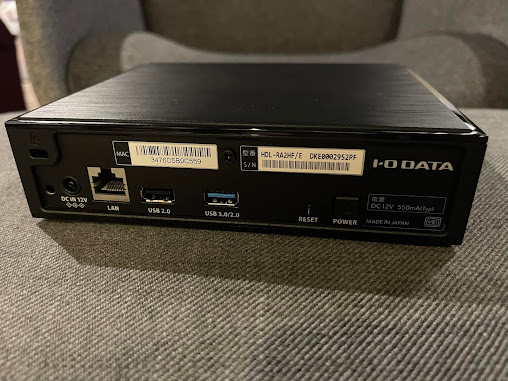
On the back is all the connections. From the left is the power with 12V DC input. The next port is the usual LAN port that support 1000mbps. Than it has 2 USB ports with USB 2 and USB 3. There is the hard reset button and follow by the power button. Is pretty simple and the unit is design as headless unit with controls all on mobile apps which is supported by Android and Apple. The unit is pretty much just plug and play. The one thing to take note is the unit need a LAN cable for it to work as this is also a NAS storage itself. There is no WIFI for this unit which I think it make sense.

To setup is very straight forward. First thing is to install the mobile apps of Fidata and connect the soundgenic to your home network via the LAN cable port. Once is turn on, it will be auto recognized by your network as a network storage device. The storage can be accessible from your normal windows or mac machines as a network drive. Pretty much can copy anything into the storage as if this is a normal hard disk on the network. Once the files are inside the storage , it can be use any other devices within the same network.


With the fidata apps, there are a lot more you can do with the soundgenic. First thing, you can do is use it as a player. From the picture above, it looks quite typical kind of player. You can use the Apple airplay or normal bluetooth to playback from your mobile devices through the player even with Spotify Connect. Of course playback from the hard disk in the soundgenic is also one other option. How this is output will be through the USB port. The USB can be connected to external DAC of your hifi component. The USB port is also able to connect with external USB hard drive.


What is the important or attraction for me is the USB optical drive supported by the unit. In this case, I have a USB optical drive connected to the soundgenic. This means, it will now be a CD player too with the external drive. The feature I really wanted is the ability to ripped the CD into the hard disk without any software or control. Once you pop in the CD, the soundgenic will automatically ripped the songs from the CD into WAV or FLAC of your choice. The cover art and information is all automatically populated as well as the unit is also using your internet for this purpose. Once the files are ripped you can share it to any other devices within your network. 

Overall this is all in one box for all the things pretty much needed for the need of digital audio. For the price and what it can offer in features, I will think is very hard to beat. This is all made in Japan comparing to many Chinese made products in the market that are on the same price range. The sound quality playback from the unit itself is also remarkable. I personally compare it with my Asus Tinker board with Volumio playback to be almost on par. This is definitely a worthy investment for a good quality audio playback and storage.

August 22, 2021

A kick-ass hifi system for under RM3000

This is something I always have in the back of my head of what is possible if I put my budget just below RM3000 but I want to have streaming, local media play back and a little bit more if I wanted to have CD player to be added to the mix. Well hifi system can be very simple as one amplifier with one pair of speaker and you are done basically. In the old days, usually be CD player or cassette or even a minidisc player. In more recent times of course digital media is kind of the main stream. Keep that in mind, I just wanted something very simple and affordable which I can just set it up to listen in my living room area. It can be family entertainment and as well as for guest coming to visit.


Now to be realistic with limited budget , it is quite obvious to look into the used market. After all, used hifi gear does have quite many variety to offer. Since this is going to be in the living room area I will pick something not too space consuming. So for speaker, the ideal choice is a bookshelf speaker. It's quite a bit of searching for something that I like and need to be low cost. After some months of going through the search, I came upon a nice pair of Monitor Audio Gold 7. This speaker is the top bookshelf back for its days back in the 90's. Definitely is a very old pair of speaker. The speaker is discontinued back in 2009. I like this speaker very much for the high which makes vocal in music very prominent and not ear piercing at the same time. Well being a bookshelf although the lower end is not comparable to floor stander but it does it very well. The condition of speaker is really good given the years this speaker has seen. I got a good offer this pair for RM600. Quite a fair price to pay.


After picking up this pair of speaker , than the next important part is the amplifier. What should be a good amplifier for it. Being a British speaker is also means is quite the warm sounding speaker. Of course the gold metal tweeter is a bit more forwarding. Probably I am thinking of some British amp probably or even Japanese amp which is more neutral. The selection for me is, I wanted an amplifier that has everything in it with DAC, USB, Coaxial, Optical, RCA. Most old school amp will be rule out for sure. Have to be something a little into the millennium to fit the bill. Most newer generation amp with all build in doesn't come cheap and also not many choices as well to fit the budget. After some long searching, decided to get this little amplifier. The Sony UDA-1  USB DAC amplifier. This unit was launch in 2013 and is discontinued back in 2018. This is a shoebox size amplifier. Is has 2 USB input, one in front and one at the back. The DAC can support up to DSD128 and support hi-res as well up to 192khz. The back it has another USB, with coaxial, optical and 1 pair of RCA input. There is also a pair of RCA output as well. The standard speaker binding post can be use with bi-wire or banana plugs. It has a credit card size remote as well which is pretty cool. This little cost me RM1300.


Now the final piece will be the speaker cable. I am keeping in mind that the speaker is kind of forwarding with the metal tweeter and now with the Sony amplifier it will be on the neutral side. I was thinking a little bit of mix in the cable with copper and silver should be nice. I found this used unit of DH Labs T-14 speaker cable. It is copper cable with silver coating to it. I have this similar cable for my home theater setup which I really like the vocal the cable produce which is clear and sharp. The cable is 2.5 meter pair and it cost RM500 for this pair. Is probably quite a bit of spending here. 


With amplifier and the speaker, I can simply hook up a laptop or even my Ipad / Iphone to the USB and I am ready to play some music. The good thing is it can support hi-res which is good for me as I am using Apple Music which recently have launch the hi-res audio. The total cost of all 3 components cost RM2400. Pretty much it is ready to rock and roll. To make things a little more , I have added into the mix a Asus Tinker board S (Single Board Computer) install with Volumio player as a media player which I can use for streaming spotify, apple air play or even listening to internet radio. This little unit cost less than RM500 which will bring my total cost to RM2900. 


Overall, I am very happy with this setup. It fulfilled all I wanted to get it for listening to music with different sources. Probably I can add in CD player in the future. For now it is covering all that is needed. The overall sound quality is pretty awesome. A short recording of the sound. Recording


July 28, 2021

Not so hifi dongle DAC

 Many music enthusiast will know what is a DAC (Digital Analogue Converter). This is a device to covert digital signal into analogue so that it can be heard by our ears. Human ears cannot understand digital signal so anything we hear is analogue wave form. Lets not get into technical detail on it but generally most of the devices we use today has DAC in it. Can be a laptop, a smart phone, TV, BluRay player, media player, etc. As all our devices have DAC inside and why do we need another one ? Various reason, some DAC cannot decode certain types of digital format, some cannot support higher resolution, some just plain without much to offer but just can produce the sound as is.


Generally as music lover we want to hear the high fidelity that music can offer and therefore external DAC comes into the picture. There are many different kind of DAC from small to big size hardware. Also many different implementation as well but I won't go there. As today many people go portable as smart device is readily available and  music streaming is also common this days. Somehow most manufacturer of smart phones also decided that the usual 3.5mm jack of earphone is no longer needed. Many a times we have some nice IEM but can't be use with the phone. So the only way is to get some kind of converter. The converter sometimes is also called pigtail converter as is usually small and just short cable. This little converter is actually a DAC as well which it convert the digital signal to analogue so the ear phone can produce the sound for our ears.


This create a bottle to the audio especially hi-res audio. So to take advantage of the many hi-res audio streaming, this comes the dongle DAC. If you compare the dongle DAC and the pigtail converter, it look almost similar. This little dongle DAC only weigh few grams. So why the bothersome of getting this little DAC ? 


Look closer to this we can see the hi-res audio label for this little DAC. With this , now I can enjoy hi-res audio without the bottle neck. It can even support up to DSD512. Pretty impressive for such a small device. The good news is also this DAC cost about RM250 or so. I think is pretty affordable. 


So what I need now is just an earphone. I have mine JVC wood IEM. It sure doesn't a lot now with this simple DAC. Not just for hi-res , even CD quality streaming sounds very good with the DAC to my IEM. Although is a little bigger than the pigtal converter but is still pretty easy to tug into the pocket when I go into train or even going for a run. Simply amazing to have this. 


To gain a little more out of this DAC, you can use it as traditional DAC together with your computer. Easily this can be hook into your hifi system to listen to your favorite songs on streaming. For myself I have contacted it with the Surface 7, playing from spotify. Of course there is no hi-res but is still pretty good with it has to offer. 


Now does this output to the amplifier if is just 3.5mm jack. This can be solve with cable from 3.5mm to RCA. You can simply get this for less than RM15 or so. I am using the AudioQuest evergreen which is a little costly but it does improve the sound even more. So with the RCA , just simply connect it to your amplifier and voila you have hifi streaming with the dongle DAC. 


Apple Music this link to a video for what I have use it for apple music with the ipad with the same solution but additional converter needed for the apple lightning connection. Enjoy the music.

May 2, 2021

No longer headless


So what is so headless about ? In computer or digital world , headless pretty much is saying that you are operating some hardware without a screen or keyboard. Practically you don't see any kind of interaction with the hardware. What is in the picture is a DIY box of music player / streamer. The inside hardware is a single board computer (Asus Tinkerboard S) loaded with volumio O/S. The idea of it is to have a remote without the need of any kind of display which is convenient.


Although this is what the whole intention is about but no doubt sometimes it will be also nice to have some visual while we are enjoying our music. Even we listen with our ears but something nice to the visual is always a plus point.  After all, hifi is an entertainment. It does make sense to make the environment to be as good as possible. Of course this also meaning that what we see during the listening is critical in adding on to the enjoyment.


So here it is, I have added a small monitor of 11 inch in size to the unit via HDMI. The Tinkerboard do support A/V as with its HDMI capable of 4k resolution and even atmos / dts X surround. That is another story. So is pretty use to have a monitor add on to it to have the nice display of the unit. The display is pretty standard is showing what is playing, volume level, the minutes, play, pause. I guess with the display you have a sense that there is something playing behind the scene of the music. This is a standard fullHD monitor but it does work with touch screen monitor too. Initially I was thinking of touch screen monitor but is quite a bit costly. I am happy to settle with this. Very much happy with it and will surely enjoy my music a lot more to come. 

August 9, 2020

My Humble CAS, Asus Tinker Board & Teac UD-501 DAC


Asus Tinker Board in it's most basic form

I first experienced CAS in 2010 and quickly adapted to it with excitement back in 2011 in the form of Bryston BDP-1 & DAC-1 combo. It's now more than 10 years since, and at one point, even before I started my hifi sabbatical in 2016, I had already given up on CAS. Somehow, I still prefer physical medium for my emotional connection to music. While the conveniences of CAS and sound quality can be highly achieved indeed, I somehow still have a preference for physical medium when it come to music. Something that you can hold in hands just feels more real. Should you feel otherwise, then to each his own. I am not one who likes to argue and get stressed over hifi matters.

I have also since learned not buy packaged music streamers & DAC sets such as the above mentioned Bryston duo. As technology moves too fast, and so does the rate of depreciation. It's a killer blow, never mind the sound!

Then a buddy of mine, Simon introduced me to this dinky little CPU called Asus Tinker Board, which is the equivalent of the Raspberry Pi CPU. Coupled to Volumio Music Player interface app on one's smart phone, it's an easy & cheap solution to music streaming. Simon says the Asus Tinker Board can be used as a HTPC too, but with different set up & interface app. Now, who wants to play a game of Simon says?

My Asus Tinker Board in action
Power supply goes in from side, unused HDMI output, and all other USB inputs/outputs & LAN from the back. Note the blue/black Oelbach USB cable which connects to the Teac UD-501 DAC

Simon had the Asus Tinker Board set up in a small plastic casing with window top. The Asus allows 4 USB input/output, and 1 LAN input. On the side, it has a Type B Micro USB power connector, and HDMI output. The Asus can be powered from any Android phone 5V power supply with the above mentioned connector. While any old Android phone power supply or charger will do the job, the Asus does sound a whole lot better when powered by a 1.2 Ampere, 5V  linear power supply. There are now plenty of such power supply to choose from, mostly China of origin. I got mine from a Asus users group buy sometime back.

The good part about using the Asus Tinker Board or any Raspberry Pi CPU as streamer is that it will adapt to any music storage resolution formats such as WAV, FLAC, or DSD at no extra cost. The only question is, can your DAC process it? With this, I took the opportunity to pick up a used unit of Teac UD-501 DAC, which can do all the resolution format available today, and for a half sized hifi component, it also has XLR analog outputs, which are definitely my preferred connection. Back in 2014, when this unit first became available, I had a go with it and really liked it. A few years later today, the latest Teac UD-505 DAC model revision still bears much functionality and design cues based upon the UD-501.  

The whole CAS set up from left: Teac UD-501 DAC, Multi USB Input, 5V Linear Power Supply(bottom) & Asus Tinker Board(Top) 

I used USB Type A to Type B cable from Oelbach to connect between the Asus & the Teac. With the overall tonal neutrality of the Teac DAC, it was actually the music file ripping quality doing the talking most of the time. The system was totally transparent & highly revealing of the rip quality. Using Cardas Neutral Reference XLR cable from Teac DAC to pre-amp, I did gain back some of that much needed warmth to make some of those busy sounding hi-res audio just bearable. 

For me this very cheap(costing less than MYR3000, excluding cables!) & cheerful CAS set up is all I have to continue with convenience music,or when I just need some back ground music.

January 3, 2013

Pathos Musiteca Music Server On Demo Now!

It's 2013 and the Pathos Musiteca has the honour to be the first new product in Malaysian shores.

What do your get when you add together fine Italian styling, chic design, functional ergonomics, computer server, tube circuitry, and lastly great sound with audiophile brand credibility?

The answer is the Pathos Musiteca music server, featuring integrated touch screen interface, with iTunes like album cover art menu. The Musiteca also functions like an all in one solution for those getting in to high end music server. First, there's a slot for loading CDs which one can play immediately, or ripp using it's built in software. Then there's the touch screen interface mentioned above. And lastly, the a built in DAC capable of decoding 24/196kHz hi-rez audio files. As with all Pathos products, there's a tube output section where one can choose to use single ended or balanced connections.

All the above means nothing if it does not sound good either, and the Musiteca does not disappoint in this respect. The sound is smooth and detailed, with a liquid top end, and honeyed mid range.

It's now on demo in Centre Circle Audio's Taman Tun showroom, so why don't you drop by for a listen?

Call Sky wong or Nelson at 03-77282686 for enquiries or appointment.

January 17, 2012

Best Digital Gear 2011.

Frankly, I am a little surprised that after 2010, CAS based high end audio products some how, just stop coming on to the market place, instead all we got was disc based players which showcased CDs at their very best! What happened?

To me it's a bit of a dejavu feeling we got during the twilight days of vinyl, when the best advancing turn table designs only started to surface when dooms day was already pronounced, back then in the late 80's. Twenty years or so later vinyl is enjoying it's second spring, while the CD is now in it's last legs, How times have changed. Ultimately, should CAS make further in roads in to the audiophile world, or just slowly fade away like SACD and DVD-A is any one's guest today. One thing is for sure, with 32/384 music files on the horizon, it's only a matter of time when new hardware will be required to keep up.

In the mean time let the CD bask in glory of it's best play back equipment yet!


TAD D-600 CD/SACD player is a master stroke.

TAD D-600 CD/SACD player.

This is likely to be the Yamato battleship of CD players. The common storyline includes being the last pride of it's kind, where the Imperial Japanese Navy built the Yamato to be the end of all battleships, while realizing naval war fare was already shifting towards more agile and aggresive carrier based strategy. TAD also adopted this view when designing the D-600 CD/SACD player. However, unlike the Imperial Japanese Navy, they did not allow the disc spinner to be redundant in the advent of CAS digital source. Instead the TAD D-600 proved to be a perfect match for the Bryston BDP-1 playing hi-rez files to form an un-matched sonic synergy that's out of this world! Playing CDs and SACDs proved to be just as spectacular an event of musical enjoyment. Digital playback don't come much better than this, as it should, fully justifying it's asking price.


Playback Designs MPS-5 CD/SACD player is unique because it's designed to be fully up grade able which will ensure that it won't be obsolete in the near future.

Playback Designs MPS-5 CD/SACD player.

This is an interesting player because of it's modular structure and software based up grade able design. It would be a shame if it didn't sound good too. However, with it's latest power supply and firmware up grades, it does live up to expectations. Like the TAD mentioned above, it also allows connection to a digital media player like my Bryston BDP-1 to play hi rez music files. In this mode, the MPS-5 actually has the pizazz to rival the TAD master class, with it's phenomenally propulsive bass quality, low noise floor and transparency. There's a tendency to lose the last bit of "air" in a given recording compared to the TAD, but in the end, I guess one should choose it's own poison here.  However, it's when playing CDs and SACDs that the D-600 proved mostly superior, perhaps due to it's sturdier built in all aluminium transport mechanism. Having said that, I must put things in context that the fact the MPS-5 is mentioned here in this distinguished list means that it's playing at the very top level of digital playback.


Ayre DX-5 AV Engine is a do it all player, but excels particularly with CDs.
Ayre DX-5 AV Engine.

This Ayre reigned supreme, if only briefly, until the arrival of the two players mentioned above. Some have said that I was perhaps, a little harsh on the Ayre DX-5 AV Engine in my original review. Again in perspective, I found the DX-5 to show it's best with CD and Blu-ray replay. It sounded just as good too, when playing hi rez music files, via it's USB input, with signal fed by a purpose built for CAS windows OS based computer. The only reservation I had with this player is SACD playback, which is a little soft, not in volume, but rather a slight lack of drive and sense of drama, which it's otherwise a rather fine and natural sounding player. I am also not being fair to the Ayre perhaps, because ultimately, it's a whole more affordable than the other two stratospheric priced players mentioned above. Actually come to think of it, which other sub RM$40k player does it all(Audio & Video) with such high levels of competency?


Krell S-350a CD player sonically out performs it's price range by a mile. At one point, it had me wondering, why bother to spend more?

Krell S-350a CD player.

If one is contemplating on buying his last CD only player, my personal advise is why spend more? This sub RM$10k CD player can sound nearly as good as CDs are ever gonna get! It's well built and operates faultlessly too. It's sonic performance is clearly in the league of players costing 3-5 times more, if bench marked just a few years ago.  My digital source bargain of the year!

Here are a few other digital source components which I believe are worthy of my mention here in no particular order or ranking, though not formally reviewed by me personally, but heard else where.

1) Wadia 571 CD Transport, 931 Digital Controller and 922 Mono Decoding Computers combo.
2) DCS Pucini CD/SACD player and U-Clock combo.
3) Linn Klimax DS with Dinamik power supply upgrade.
4) Vitus Audio SCD-010 CD player.

That rounds up my Best Digital Gear 2011. Stay tuned for Best Amplifiers 2011, next!

November 13, 2011

Payback For Playback! Playback Designs MPS-5 CD/SACD Player.

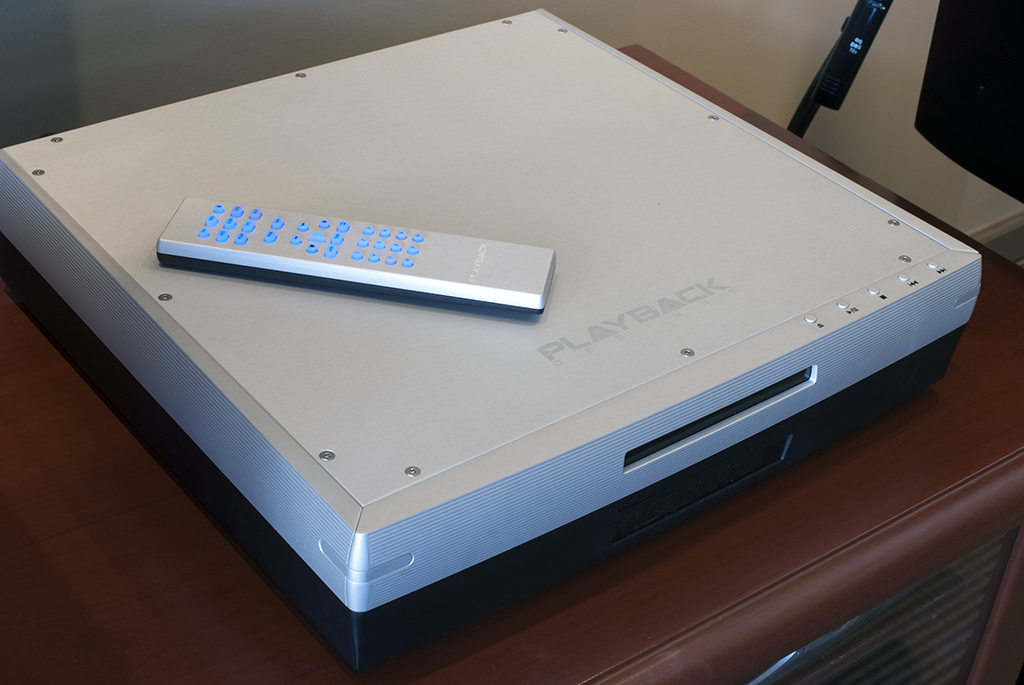
The very smart looking two toned aluminium box of the Playback MPS-5. Note the ergonomically designed hand held remote with back lite. I just loved holding it for the sake of feeling it in my hands!

If there's ever a product that matches the cliche called "The Best Thing Since Sliced Bread?" this Playback Designs MPS-5 CD/SACD player is it! To find out why I would think of it this way? Read on........

If this player looks familiar to you.... then it's because we've covered this very exact one before, in one of our home visits called "Greatness In The Making"! Now our buddy Mark in his quest for greatness, has no choice but to take a temporary rest, as he moves his nest. While he has found a new nest capable of accommodating ever bigger speakers, it had to undergo some major face lift. Which is why, ever the generous person that he is, is allowing us to comb thru some of his toys. This is one of the first in which we'll write about, with his kind permission of course.

Playback Designs is the brain child of Andreas Koch, who had previously held designer positions with some of the most respectable digital audio brand names. The MPS-5 is the flagship product of his company. What makes the MPS-5 special is the upgrade programs on offer for dollar top ups, so that your brand new digital player purchased today, never gets left behind, as technology marches on, which is often the case. There have been so far algorithm and firmware up grades available on the software side, while new, beefier power supply and USB up grades are available on the hardware side of things.  Mark had just up graded his player to the latest spec, making his MPS-5 one of the first that I know of that is truly capable of native 24/384 sampling rates and also 6.1 MHz DSD when used through the USB-X box when playing files from a computer.

I had the re-fresh ed player straight back from the upgrade services. While on previous occasions, I thought the MPS-5 was a good CD/SACD player, it never really struck me like my favorite cuppa teh tarik(sweetened condensed milk tea, which is a Malaysian national beverage). However, the latest round of upgrades really had me convinced now that Playback is now a formidable high end digital contender!

Playing CDs and SACDs really digs out all the available information out of those shinny five inch disc. It's is naturally comparable to the TAD D-600(our current reference). The thing that immediately impressed me was that fierce and gutsy bass. Kick drums kick just a bit harder and bass lines just swells a little fuller, with the right amount of gutso too. Dynamics response of this player is a very strong point and playing hard rocking tracks never disappoints. Great sounding too are those Reference Recordings orchestral SACDs. The mids have just enough of warmth to portrayal of believable vocal. I must say though that the similarly priced Vitus SCD-010 does sound somewhat sweeter and sexier in this regards, especially when it comes to ladies like Stacy Kent. Is the Vitus more correct? I don't know, and only one can determine what's desirable for one's self. The highs of the MPS-5 is just very slightly truncated, again compared to the (nearly twice as expensive)TAD. I know it's not a fair comparison, but sonically, all these 3 players are so well positioned, the comparison just begs to be done, especially when we had all three rotating between us.

The modular internals of the Playback Designs MPS-5. It's got various digital inputs and outputs accessible via the back panel.

The MPS-5 possesses the darkest sound stage presentation, with laid back imaging and layers well separated. The TAD, on the contrary, gives a bit more "air" in it's presentation and is somewhat more revealing of the timbre plus harmonic textures of un-amplified string instruments, like piano, violin, viola, cello and double bass. Ditto for wood wind and horn sections, making it the most natural sounding of the 3 players. At this exalted level of playing playing field, I believe it's the little things like these that matters the most. The Vitus balances the other two players in between, by being the most forward imaging, yet without a hint of edginess.

However, it is when it comes to feeding hi-rez files in to the MPS-5, via my Bryston BDP-1, with the AES/EBU digital cable, made me realised just how much synergy this combo had, much like with case of the TAD too! Doing hi-rez music files via the Playback really made me forget about the comparo and just enjoyed the music. The Playback had a very analog sound to it with hi-rez materials, which relegated my analog front end to temporary dust magnet status. It practically matched the TAD blow for blow in this regards and that shows the DAC performance in the Playback to be of superior quality, as with the TAD. It is when I realised that the transport section of the TAD is the more capable of the two. It is rather unfortunate we did not get to do the hi-rez thing with the Vitus, due to time and scheduling constraints, because it would have been interesting.

Bryston BDP-1 and Playback Designs MPS-5, sonically match made in hi-rez heaven.

Make no mistake folks, we are playing at the pinnacle level of digital performance available today, now and a foresee able future.  I could really lived happily ever after with any one of the three digital players mentioned, especially with the TAD or Playback(if my budget doesn't go as far!), when pairing either of them with my Bryston BDP-1. For a brief month or so, I was in digital heaven. I've since being made to come back down to more earth bound performances.

Playback Designs is not available from any authorized dealers as yet in Malaysia. I hope some smart cookie of a dealer will be brave enough to bring it in to our shores, the horrific sticker price aside. However on the audio performance front, coming back to an answer for my opening question. The Playback MPS-5 is almost the best sounding digital player since the TAD D-600 left my room(just like the best thing since sliced bread!), and that's a very tall order indeed.

Lastly, I wish to thank Mark for sharing his exclusive toys with us. Stay tuned for more to come!

August 18, 2011

Ripp In Peace(RIP)! More CAS Adventures.


O.K., You've decided to step in to the world of CAS(Computer Audio System). What next? You need to decide if you're gonna ripp all your CDs in to you computer or just spend $$$ buying legit hi-rez music files as source? I bet it's gonna be both very likely.

For me, since I am using the Brsyton BDP/BDA-1 digital media player/DAC combo, I won't go in to the lengths of building one's own computer for the purpose of CAS.  Instead, I'd jump right in an look in to music files and the ripp process.

There are various CODEC used for music files out there, but the most popular ones today are likely to be FLAC, WAV, AIFF & APE. So one must decide what CODEC to ripp the CDs with? The next question is which Music Converting software is best? Do they sound any different at all?

I am here to share my bit of experience here. Personally I have done ripps on all 4 of the above mention CODECs, but about 60% of my CDs are ripp with AIFF, with the remaining 40% shared amongst the other three. Amongst the 4 CODECs, I've found WAV and AIFF to sound most neutral with ruler flat frequency response. I've found FLAC to be slightly rolled off on the highs comparing against the earlier mentioned two. APE is my least favorite as it tends to sound a little noisy(hiss) in the back ground. However I am talking about high end aspirations here, meaning uncompressed 16 bit CD ripps, played back on a suitably capable and revealing enough high end system too, not your average MP3 jobs played back on ipod! I suspect that for most, it wouldn't quite matter anyway, other than us anal audiophiles!

Next, I'll go in to the Music Converting software. There's plenty available for free to down load online, including a trial version of Exact Audio Copy(EAC), which is highly recommended in the CAS forum circles, which I've tried. Then there's dbpoweramp, which was recommended by Bryston, for the BDP/BDA-1 combo users. I ripp a CD twice using WAV on both Music Converting software, but heard absolutely no difference in sound quality what so ever. However, I ended buying the dbpoweramp for one and the only reason, ease of use. The dbpoweramp automatically searches it's data base for an album cover that's been ripp. I find that for most cases(for English tittles at least), it has 80% success rate in finding the album cover. It's rather hopeless with album covers of any other language! So for all my other non-English CD covers, I'd resort to google image search, with reasonable success too. Those that I can't find? Well, there always the scanner solution, but it's another tedious round of work altogether, which I've done for a few of my CD covers by the way.

The one area that dbpoweramp is absolutely hopeless in is when inserting a Copy Right Protected CD to ripp. The ripp will never be completed as it'll always hang in the ripping process. It's nearly 8 months since I started my CAS journey. I've now nearly completed my CD ripping endeavours, only 60 out of nearly 2000 left. Mostly with the hard to find Chinese album covers! Save the best for last I guess.

Over the last few months, one area of CD ripp process that really effect the sound quality of any given CODEC music file is actually the computer power supply, and it's ancillaries, which I'll go in to on my next CAS adventures sharing. Happy Ripping!

August 12, 2011

The Ultimate Digital Source! TAD-D600 CD/SACD Player.

Now we all know how much Odiosleuth loved this TAD disc spinner, to the point of suffering from withdrawal symptoms after he had to send it to me! For the 3 of us in Odiosleuth's room that fateful night of 3rd July 2011, listening to the TAD-D600 and C2000 pre amp, powering the Pass Labs XA-60 and a pair of PMC IB2i, will forever change our reference point in the context of super high end audio.

I had a quick run thru the TAD-D600 disc spinner before sending it back to AV Designs and this is my somewhat belated report!(Now that the KLIAV excitement has cooled down) Since Odioslueth has already gone in to great details about the construction and feature count of the TAD, I'll just skip to the bits that mattered.

Using the TAD-D600 disc spinner in place of my resident Bryston BDP/BDA-1 combo is a revelation. I've never thought CD playback technology has marched on this dramatically since I abandoned the format a few months back. The TAD-D600 just loves to spin CD after CD, and I never got jaded or tired listening to it. In fact, the only thing that bothered me a bit was that I keep hearing my system putting it's finger print on to the musical signal, post TAD. I just wished I had the TAD-C2000 pre amp in my system back like that fateful 3rd July night, but alas, it was not to be.

Back to the TAD, the first thing that struck me was like how much micro details it pulled out of that 5 inch silver disc. It kinda reminded me of the Esoteric X-03 SE disc spinner, except that thru the TAD the details were somewhat less "showy", less attention grabbing, but rather of the more organically integrated in to the musical fabric kind of presentation which is hard to beat. There was no noise floor from the TAD to talk about and the back ground of music was pitch dark, allowing the staging and imaging properties to prop out easily. It's hard to talk about the tonality of the TAD too, as it's rather chameleon like in that respect, mostly reflecting the recording that's been played back at the time. With the TAD, the hardware just disappears and leaves the music to work it's magic. I thought the bass quality of the TAD is "sub"liminal(pardon the pun, very much intended!) to as it seems to go a octave or so lower than most other digital source, but not only that, the bass had a supple and non-hollow quality that is very much like an analog source. The mids are highly transparent and at the same time presents vocals with a solidness that some lower end turn tables will find it hard to match! The highs are pristine clear, "airy" in quality and if I may use the pixel for visual analogy, is one of the finest I've heard from any source, digital or otherwise. This lead to a totally au-natural, most grain free, musical presentation I've come across. Limits, if any heard, I think I was listening to the limits of my system rather than the limits of the TAD component, because by now, after repeated listenings in the AV Design's showroom, and at Odiosleuth's place had me convinced that this TAD disc spinner is meant to be partnered with the best ancillaries possible, which are sadly beyond my economic means.

Most CD players which also plays SACD tends to only excel in either format, but never both. This TAD again impressed me with the way it handled SACDs. I've got the odd few SACDs lying around and the TAD played them with much conviction, never before realised in my system, by this fringe, if technically superior format. Via SACD, the TAD-D600 became even more transparent, organic and dynamic. One can almost say that it almost sounded like analog in it's presentation. I played my favorite Jennifer Warnes album, The Well  on SACD. My often used test track, An Ode To Billy Joe was a joy to listening to. The grand piano in the song was well "grand" with all the audiophile licks like pedal noises, and internal mechanical workings being fleshed out like never before. Not only that, the string harmonics and wood resonances of the piano were revealed their full glory. The way Jennifer vocally tease the microphone and her phrasing is very exact in it's portrayal.

I then move on to plug my Bryston BDP-1 in to the TAD-D600, via it's AES/EBU input with the aim to stream some hi-rez files. And my, my, what bounty this little move brings. I first compared by streaming some 16bit CD ripps on AIFF just to check if there's any difference vis-a-vis playing the actual same CD on the TAD transport. I heard no difference what so ever, which is good, because that means my ripps are as good in quality as the high end CD transport playback, or the TAD's transport is just so superior that what ever supposedly weaknesses due to the CD transport design are all but mitigated.

Next I tried streaming some hi-rez FLAC files to the TAD, first some 24/96 then working my way up to 24/192 sampling rates. I am happy to report that the TAD locked on to the incoming digital signals, regardless of sampling rates, first time, every time reliably, unlike some other players that we've tested earlier on. With hi-rez files, I am just transported to hi-rez heaven, if there's such a place here on earth! Forget about hifi and just cut straight in to the musical event being replayed, especially live recordings, which is painted on a big finely textured canvas screen in front of the room and the whole performance just comes alive! The TAD-D600's DAC is just so superior that returning to my regular BDA-1 DAC just left gaps in the same musical event, paint on course canvas(is that slightly nutty Big E talking AV projection here or what? Ha! Ha!) and left me wanting. To be fair, the TAD is nearly 8X the price of the Bryston combo and taken in that context, the Bryston combo can certainly held it's head high, mainly because I never suffered any withdrawal symptoms after sending the TAD-D600 back, but I tell you that was a real close call too(the withdrawal symptoms, that is!).

The thing with TAD is that it does everything it sets out to do the with best of today's digital technology allow able. It's certainly THE best CD & SACD player I've heard to date, what's more, it's an absolute musical time machine with hi-rez material streaming via the Bryston BDP-1. I'd certainly recommend for any body with the financial muscle to consider buying the TAD-D600, to seriously also consider bundling the Bryston BDP-1 in to the purchase for THE Ultimate Digital Source money can buy today!

TAD is sold by AV Designs, contact James, or Tony at 03-21712828.

May 5, 2011

All The Ayre You Need? Ayre DX-5 Universal A/V Engine.

The Ayre DX-5 A/V Engine, I could only test the audio side of things here.

The Ayre DX-5 A/V Engine(I'd call it a multi format disc player!) has been a controversial product since the day it hit the market! Hifi and audio forums around the globe engaged in heated debates as to weather if it's an Oppo Blu-ray player(a beer budget one too, mind you!) in glamorous drag? Frankly, after a week playing with the Ayre DX-5, I still find it hard to give you a direct answer!!!

The Oppo DNA is obvious the moment the CD tray slides out. The display window is pure Oppo too. In fact, a look inside the player will show you that the whole front end of the DX-5, from disc mechanism to logic control and A/V output board, is taken wholesale from Oppo. However, I also saw where Ayre put their handy little touches too, things that transform a great budget disc player to super high end performer, sound wise. The power supply has been completely reworked, with individual transformers for digital and analog sections, with each having multiple stages of regulation. The A/V board has been reworked with some sections by passed entirely(especially the DAC and audio section) for Ayre's handy work.

I did not get to test the Ayre DX-5's visual performance aspect as I do not have an AV system to do so(Odiosleuth already covered that part). However, my interest were more in to the audio side of things. Immediately, I hit two road blocks the moment I tried to play some music files via it's front panel USB input. First, this input only reads MP3, or WMA format resolution files. The second issue I faced was that I need to use a screen to scroll thru the Ayre's(or is it the Oppo's?) graphic interface menu. Well, there's always the other USB input at the rear panel for CAS purposes. I scanned thru the very thick manual only to find that the Ayre DX-5 will not read audio files off a passive storage device(like an USB thumb drive)! It only takes an active streaming signal from a PC for the Ayre to work as part of the CAS engine.

No worries, I know a guy who has an Ayre QB-9 in his high end CAS audio system, and he was very kind to obliged my request to do the CAS part of my review by comparing the DX-5 to his resident Ayre QB-9 Version II. As expected, streaming files off his dedicated audio PC via USB to the DX-5's back panel USB input worked flawlessly. The DX-5 would lock on to the signal every time on first stream, all the way from 16/44.1 to 24/192 audio resolution files. Once locked on to the in coming signal, the front display window would show the input bit/sampling rates. After about an hour of listening and comparing some tracks between the Ayre DX-5 and QB-9, all of us, Odiosleuth, the system owner, including your's truly agreed to the conclusion that the musical result via both the Ayre units sounded no different.
It's music maker supreme, when playing back CDs. Pictured here with the Phil Collins, Hits CD.

With CAS aside, I brought the Ayre DX-5 home for some disc spinning duties. I haven't played with my CDs for a while now, and it's nice to hold something tangible in my hands, and be able to read thru the liner notes as the music is played, something which is not possible with CAS. The Ayre excelled as a CD player, it's Ayre signature of warmed, refined tonal balance is clearly evident. The DX-5 also excelled at digging out almost all the data out of any 5 inch disc playable. Music was truly transparent, noise free, and true to the recordings. The Ayre would surely shine with excellent recordings, but will also let you know about the poorly recorded CDs. However, the Ayre is rather kind on the later as they still came across as musically relevant, despite the imperfections. The DX-5 can handle the most dynamic and transient response demanding CD and still come across sounding like effortless. It never sounds strained or displays any of those at it's limit's harshness. The real killer part is that the Ayre aces all the hifi check list yet still sounding homogeneous, coherent, natural and unforced.

Some say Ayre players can't rock, but the DX-5 proved otherwise. I was a little sad the day Phil Collins announced his retirement from the music business, after all, he was one of those few drummer's who could carry a decent vocal tune too! I went home and put on Phil Collin's, Hits compilation CD, and searched for the hardest rocking track, titled Easy Lover, a duet with Phillip Bailey. It was phenomenal for how the Ayre held it all together at near concert level volumes, in my tiny man cave. The searing guitar rifts, over enthusiastic vocals, aggressive bass lines and hard hitting drum kit, fused in to a solid, believable musical performance, that these great musicians were right in front of me, nearly live sized, it made me sweat! When it came to power ballad(another Phil Collins specialty) the track Against All Odds, left me nearly wet eyed(OK, I lied, I shed a tear alright, happy?) and heart ached, with a heart felt feeling of true love lost. Call me a SNAG(Sensitive New Age Guy), or even a softie if you want, but if a piece of high end audio equipment can tug my heart strings like this, for that, I would put the Ayre's CD performances even above the mighty Esoteric X-03SE or Wadia 381i, yes it's that good.

However, I was a little disappointed with the SACD performance of the DX-5. Compared to the excellence of the CD performance, the few hybrid SACDs that I have sounded soft, and slightly muted compared against the CD playback. While it still have that lovely refined mid range density of Ayre's sonic signature, it suffered from being just slightly on the overripe side of things. For some, and their systems it may find favour, but not in mine. I did not have any DVD-A format disc to play on this player.
The back lit remote with way too many buttons!

Taken on the whole, this Ayre DX-5 tries to be the Jack of all digital tricks, but ends up being the master of one(I did mentioned that it's CD playback is beyond superb! Well, master of two if you count it's excellent Blu-ray picture quality). I guess it would make perfect sense for those, who like Odiosleuth, have an integrated A/V & stereo system in one room, where the Ayre would do the duties of DVD, Blu-ray and CD play back with near perfection. SACD playback is an Achilles heel for Ayre, which after comparing to the superb CD playback performance, makes one naturally to expect more, given a superior disc format?

And lastly, for those who have migrated to CAS like me, may be left a little disappointed that the DX-5 did not read files off a passive data carrier like a thumb drive. For the money, priced at RM$38k, I would have expected Ayre to include the CAS audio file decoding(of FLAC, AIFF or WAV) engine inside the DX-5. However Ayre does not seem to think so?
The back panel of the Ayre DX-5, note the built in fan, which is noiseless when in use. The thick, informative owner's manual is a must read before you start playing around!

What ever the reason, the Ayre DX-5 is probably the perfect A/V Engine, for today's disc bound, high end A/V and stereo enthusiast, with a view for future CAS compatibility.

Ayre is sold by Hi-Way Laser, contact Kenny at 03-78738325 or 019-2813399.

April 27, 2011

Music Maker Supreme - Ayre DX-5 Universal A/V Engine


I have, finally, listened to all 3 disc players from Ayre in my own system. They are the CX-7eMP CD player, the C-5xeMP Universal Stereo Player, which incidentally is also my resident digital frontend, and the latest top of the line DX-5 Universal A/V Engine.

I can only say that I am amazed how Ayre has managed to keep the pecking order in terms of sound quality among the trio, given that the 2 machines that came before the DX-5 are already performing at the very high level within their price point.

The DX-5 has all the virtues of Ayre house sound, and it renders them even better. The sound is full and organic, even more natural and more analogue than its own siblings.

This is a supremely listenable machine. With all my reference CDs that I played, whether it was classical, vocal, or jazz, they were all very easy yet very enjoyable to listen to. I could listen to every piece of music with great interest and without feeling any listening fatigue. The sound was unforced and so rich in details that it must surely be ranked as one of the best in this area. However the DX-5 just unfolded the details for the listeners rather than highlighting and forcing them onto the listener. The details served the musical message.

The DX-5 is not merely a piece of hifi, but a music maker. That is the one accolade I would bestow on this Ayre.

The DX-5 retails for RM38,000 list. It inherits the design cues of the C-5xeMP. If you just take a casual glance, both machines look similar from the front. The obvious difference is that the DX-5 is a few cm shorter than the C-5xeMP. Then, you would also notice that the disc tray is placed above the display in the DX-5 but the other way round on the C-5xeMP. I’d like to see a sturdier disc tray than the plastic one currently on the DX-5.


The USB input on the fascia. This one plays MP3 and WMA files only.

Another distinguishing feature easier to miss is the USB input at the left bottom area of the DX-5’s fascia. How convenient, I thought. With this USB port at the front, I was looking forward to plugging in a thumb drive and playing CD quality or high res material. Alas, it was not to be. I discovered that this USB port could not handle CD quality or high resolution files in AIFF or FLAC format, instead it only worked with down sampled files in MP3 and WMA.


Note the other USB input at the left bottom corner. This input allows you to stream digital music files from a PC. Note also the various options to output analog (balanced and single-ended) and digital (including AV via HDMI) signal

Anyhow, if you are set up for computer based audio, you can stream your music files to the USB port at the back of the player, i.e., the DX-5 can be utilized as a USB DAC, just like Ayre's own QB9 DAC. I don’t have a computer audio setup, so I relied on a friend who was heavily into this for a listening test. The DX-5 accepted the data stream from the computer without problem, up to 24/192, and the sampling and bit rates were shown on the DX-5’s display. Comparing music files ripped from a CD and the original CD itself played on the DX-5, we could not hear, for all intent and purposes, any meaningful difference.

I also briefly used the DX-5 as a Bluray and DVD player playing movies, using its HDMI output into an AV amp. The picture quality was better than my other disc players, it looked slightly more natural and smoother. However the improvement in the video sound quality was much easier to hear. I don’t know how and why, movie soundtrack from the DX-5 had a more natural quality.


Almost the entire time I used the DX-5 as an audio disc player though. I listened to CDs and SACDs. On classical music, such as Dvorak’s Symphony No.9 (Christoph von Dohnyanyi and the Cleveland Orchestra), the DX-5 conjured up a huge stage, the big orchestral spread filled the front of my listening room. The sound had excellent density, dynamics and weight, yet it was also agile. On vocals such as Pop Pop’s Brasileiro and 2v1g, the performanc was filled with emotion and it flowed organically. On classic jazz recordings, such as Sonny Rollins’ Way Out West, the saxophone was seductive, the double bass was thumping away with excellent rhythm, the drum had good attack and the cymbal/high hat had that spread in the air quality.

The sound from the DX-5 was so attractive, so easy and so enjoyable to listen to, I found it hard to pry myself away from a listening session.

It was always “Ok, this is the last CD, I need to go to bed now”, but then I’d find myself putting in yet another one and repeating the same phrase for another half dozen of times...

Ayre is available from Hi-Way Laser. Contact Kenny 03-7873.8325; 019-281.3399

April 10, 2011

What is in this Naim? The Naim Uniti All-In-One Audio Player

A lot is in this Naim.

It is a CD player.

It is a tuner.

It is DAC with 4 digital inputs (!), 2 coaxial and 2 optical.

It is an iPod dock, catering to the i-generation.

It is a USB music player. There is a USB slot at the front panel, you can plug in a thumb drive or a HDD.

It is networkable, so you can use it to stream music or play music from the net.

It is a pre-amp (however the pre-amp output is limited to Naim’s DIN style connector, so its compatibility with others is limited, unless you get a pair of interconnects customized with DIN to RCA termination).

And to round it up, the Naim Uniti is also an integrated amplifier, giving out 50w per channel into 8 ohms. With its pre-amp output, you can also bi-amp your loudspeakers by adding a Naim power amp if you so wish).

The Naim Uniti is complete as it is. So, you just need to add a pair of loudspeakers, and you’d have a very decent music system.


The line level inputs and outputs at the back of the Naim

I started by evaluating the Naim Uniti as a CD player. No, in fact, when I started, I wanted to use the Uniti as a digital player cum pre-amp, by-passing my own pre-amp. I thought that with a shorter signal path and just a pair of interconnects instead of 2 in the chain, that should be the best sounding set up for the Uniti. But alas, the pre-amp output was using the DIN connector, and I did not have a pair of compatible interconnects, so I had to ditch that idea.

Back to the Naim as a CD player, since it has single-ended output only, I needed to change from my Audioquest and go back to my trusty Wireworlds. There I came to another road block. The RCA ins and outs on the Uniti are spaced rather close – it is nothing out of the ordinary, it is the British hifi style. However, the tight spacing meant that I could not get my Wireworld Eclipse interconnects, which has chunky RCA connectors that Americans so like, to plug into the RCA outputs. I had to resort to a pair of those red-and-white interconnects that were thrown in with my Marantz DVD player.

I listened for a few days this way, as the Uniti was left to burn in. The sound was not objectionable. It was in fact quite enjoyable and was improving as the days go. However, there was a lisp in the treble that never went away. I thought that was the characteristic of Naim, then it struck me that it could be the interconnects. I rummaged through my cable box and found another pair of Wireworld, the Lunar, Wireworld’s entry level model, they could fit into the Uniti with its much less chunky RCA connectors.

Well, the lisp was gone for sure with the Lunar, and there was further improvement to the sound, the slight dryness to the sound which I attributed to the Uniti was also eliminated. This experience confirmed that the Uniti ought to be paired with a good pair of cables and it deserves some care from the owner.


The swing-out CD tray, note the small puck beside the spindle, used to weigh the CD down

I enjoyed operating the swing out CD tray on the Uniti. You manually pull open the smoothly operating tray, which swings open in a curve, lift a small pug from the CD spindle, put the CD on, put the puck back, which is held down magnetically, push the tray back in, the Uniti reads the CD, and you are on.

As I alluded to earlier, the Naim Uniti’s sound was quite enjoyable. It was musical. Though the listener’s musical enjoyment would come from a direction different from others, as the major contributing factors are the pace, rhythm and timing stuff that Naim is so famous for. Yes, the Naim portrayed PRAT the foremost, whether it was fast or slow music, it was always exhilarating, never boring.

The Naim sound was lean, and I meant this in the best positive way. There was no excess anywhere, no warm fat bass, syrupy or chunky mid, or saccharine sweet high. The Naim just got on with making out the music notes as they should be - it sounded natural and it sounded right.

Next, I tested the Naim Uniti as a USB player. Big E lent me some of his ripped CDs in AIFF format and some high res music files in 24/96 and 24/192 FLAC format. You could use either a thumbdrive or a USB HDD to connect to the Uniti’s USB port on the front fascia. Well, I discovered that the Uniti did not recognize AIFF format, and it would play the 24/96 FLAC files but not the 24/192 ones (I believe it could play MP3 and WMA file formats, though I did not try them).

I had to plod on nonetheless. Playing high resolution 24/96 FLAC files via a thumbdrive or a HDD via the Uniti was easy. Navigation via the file system was done with the remote and the Uniti’s nice, much bigger than usual display window.


Plug a thumbdrive into the USB port...


...the Naim Uniti reads the file directory for a few seconds, and the filenames come up in the sizeable display window

The high res material had an edge over CD. Though I did not have anything duplicated on both high res and red book to do direct comparison, I heard certain consistent qualities from all the 24/96 FLAC files I played. The sound was richer; the music sounded more ‘continuous’ and smoother; there were better details, for example the setting in which an acoustic recording was made could be better discerned.


The sturdily built Uniti remote

I did not try out the other source capabilities of the Naim Uniti, mainly because I did not have the infrastructure to do so. However, I believe the Uniti will turn in an equally musical performance with an emphasis on PRAT on all of them, and the higher res digital you go, the better it will sound.


The strangest design feature, shouldn't the loudspeaker output on the left be labelled and wired for the right channel, and the output on the right for the left channel?

As a last step I tested the Uniti as a complete unit, i.e., playing CD/USB and using its amplifier section to drive my loudspeakers. Here, I discovered something really quirky (to me at least). The left/right loudspeaker channels were wired reverse from the norm! I initially thought it was a mistake, but no, the labels were right. Can some Naim user tell me the rationale behind this?

The 50w per side amplifier section has the same sound characteristics as I described early for CD and USB – lean, excellent PRAT, musically enjoyable. However, it could not push my EgglestonWorks speakers to satisfyingly high levels. I decided to bring it downstairs and use it on a pair of Sonus Faber Concerto bookshelf speakers, which turned out to be a much better match. And there it was letting me enjoy exhilarating music for a few days.

For its asking price of RM15,000 (list), the Naim Uniti simplifies the music lovers’ life, distilling the functions from many boxes into one. As we always say, simple is beautiful, isn’t it?

I am sold on Naim’s house sound. It’s musically enjoyable and my listening sessions usually turned into a 1-2 hours affair. Now I know what all the fuss is about.

Naim is carried by CMY Audio & Visual, contact John at 03-21439406.