Showing posts with label HiFi Review. Show all posts

May 5, 2026

New TAD Integrated Amplifier and Loudspeakers at AV Designs

Posted by Tan

AV Designs recently hosted the launch of TAD’s latest offerings: the TAD-A1000 integrated amplifier and the TAD-E1AX floorstanding loudspeakers.


The TAD-A1000 joins the Evolution Series as the first-ever integrated amplifier in the lineup, inheriting its signature design language of robust build quality paired with understated refinement. The chassis is deeper than it is wide and it is also taller than the other components in the Series. Its dimension together with its substantial 29kg weight give it a commanding presence on any audio rack. Delivering 250W into 4 ohms, the A1000 is listed at RM111,300.


The TAD-E1AX represents the third generation of the Evolution One model (following the E1 and E1TX). Effectively a "younger brother" to the Evolution Series' flagship the TAD-GE1 (Grand Evolution One), the E1AX features a beryllium diaphragm tweeter crafted via TAD’s proprietary vapor deposition technique—a technology shared with the Reference Series. In a significant design shift, the bass reflex port has moved from the side to the bottom of the front baffle, mirroring the GE1. This 3-way system utilizes a concentric midrange-tweeter driver and dual 6.5-inch bass drivers, and comes in with a list price of RM112,800.

The demonstration featured an Innuos streamer and TAD-DA1000 DAC as the frontend, feeding the TAD-A1000, which in turn drove the TAD-E1AX loudspeakers. 

True to my expectation, this system demonstrated the TAD ethos in spades.The system delivered a wide frequency response with bass extension that would knock many listeners’ socks off. It had effortless dynamics and impact that belied its size, the soundstage was huge. The sound was clean even when playing at very high volume level. Compared to its predecessor, the TAD-E1AX is a significant leap forward—offering a larger, more transparent sound that inches closer to the RM200,000 GE1. 

Of course, the contribution of the TAD-A1000 must not be discounted. Throughout the demo session, the integrated amplifier was simply unfazed, exerting control on the loudspeakers over the entire proceeding, regardless of the demand from the music.

TAD-E1AX (left) and TAD-GE1 (right)

Together, the pairing of TAD-A1000 and TAD-E1AX proved remarkably versatile, it is a combo that is comfortable with all music genres—handling delicate vocals with finesse, then unleashing full power on more bombastic tracks without hesitation. Most importantly, the system stayed true to the musical message, delivering high-resolution sound that was consistently engaging and enjoyable.

Here are 2 videos I captured of the system during the event:

Queen Mary by Francine Thirteen

Cantique de Noel (O Holy Night) from the album "Cantate Domino"

Contact AV Designs (03-6241 1237) to schedule your personal audition.


September 16, 2025

MoFi SourcePoint V10 Master Edition Loudspeakers — A Sonic Giant

 Posted by Tan

When it comes to loudspeaker design, Andrew Jones is one of the few names that commands enormous respect and admiration. Having followed his work since his tenure at Technical Audio Devices (TAD), which produced the TAD-CR1 and TAD-R1 (now in TX guise) loudspeakers that have long served as my reference loudspeakers, I’ve come to expect a certain level of sonic excellence from anything bearing his signature. So when I heard that Centre Circle Audio had set up a demo pair of the MoFi SourcePoint V10 Master Edition loudspeakers, the latest iteration of Jones’ design at Mofi, I had to experience them firsthand.

First Impressions: Big Ambitions, Bold Execution

At 48.8" high, 19.9" wide, 15.5" deep, and a weight of 160 lbs.  The SourcePoint V10 Master Edition is a physically imposing loudspeaker. This is no thin-and-slim-column design beloved by many high-end loudspeaker marques. The design is ambitious: a coaxial driver handles the midrange and highs, pairing a 10-inch midrange with a soft dome tweeter. Delivering at the low end are two 10-inch woofers and, rather than conventional reflex ports, two 10-inch passive radiators are used at the back. This configuration hints at a performance focused on coherence, scale, and dynamic capability.

The Mofi SourcePoint V10 Master Edition (right) and the next model down, the SourcePoint 888 (left). Size wise, the V10 is a substantial step up

Close-up of the coaxial driver

On my first visit, the speakers had only been unboxed for a couple of days. As expected, they weren’t fully run-in. Yet even in this nascent state, the V10s’ strengths were unmistakable. The scale was enormous, the dynamics impressive, and the mid-to-high detail was already shining through. It could convey emotion of a solo voice and also let rip with rock music. It was clear that these speakers had serious potential. There were areas to be further improved on - the bass was undeniably powerful, though I could detect a slightly ponderous side—lacking the agility and definition I associate with Jones’ work. The overall presentation felt slightly congested, as the drivers were still stretching their legs.


Second Encounter: Transformation Through Time

Fast forward to a month later, I returned for a second listen. What greeted me was nothing short of a transformation. The V10s had matured beautifully. The congestion had lifted, revealing a soundstage that was even more open, expansive, and immersive, one of the best if not the best at this price point, and easily rivalled others selling at multiples of the V10s’ asking price. The bass had undergone a complete metamorphosis—now tight, punchy, and fast, with impressive depth and control. The passive radiators were doing their job with finesse, delivering low-end authority without the boominess that could plague ported designs.

What struck me most was the coherence in the V10s’ musical expression. From top to bottom, the V10 delivered a seamless sonic picture. The coaxial driver ensured that the midrange and highs were perfectly aligned, resulting in a natural, lifelike presentation that conveyed musical nuance with clarity.

Play It Loud: Clean, Lively, and Addictive

One of the most delightful characters of the V10s was how well they handled high volumes. They practically begged to be played loud, and when we obliged with the volume knob, they responded with clean, distortion-free output that retained its composure and its communicativeness. Whether it was orchestral crescendos or driving rock anthems, the V10 made everything sound exciting and alive.

This liveliness is also a hallmark of Andrew Jones’ designs at TAD. I could recognize similar shades of performance traits —the openness, the scale, the speed and the dynamic punch. While the TADs could pip the Mofi V10 in terms of top-end crispness and micro-detail resolution, the latter is still a highly satisfying listen in these respects, especially for those who do not prefer a warts-and-all presentation.

The 2 passive radiators situated at the back of the V10

A toggle to tweak the tweeter level is situated above the binding posts, allowing the owner to match the highs better to the room


SourcePoint V10 Master Edition : A Triumph of Design and Value

The MoFi SourcePoint V10 Master Edition is a triumph. It’s a loudspeaker that punches far above its price class, delivering scale, dynamics, and coherence that rival far more expensive offerings. 

If you’re in the market for a loudspeaker that thrills, engages, and delivers a taste of reference-level performance, the SourcePoint V10 Master Edition deserves your attention. This is a great loudspeaker, period.

Mofi SourcePoint loudspeakers are carried by Centre Circle Audio, call 03-7728 2686 to arrange an audition.

January 28, 2025

CCY Engineering SS300B - Malaysia's Own Class A Power Amp


Posted by Tan.

Many regard Class A as the finest-sounding amplifier topology, and I wouldn’t argue with that. Sure, Class A has its disadvantages – heat generation, bulk, and cost, to name a few. But hey, as a dedicated audiophile, I like to live a little dangerously. Ever since my first encounter with Pass Labs’ Aleph 3, that charming little porcupine (nicknamed for its chassis covered with protruding fins) of an amp and smitten by its beguiling sound, all my subsequent amplifiers have been full Class A designs from Pass Labs. I’d characterize Class A sound as transparent, natural, and comes with a touch of richness and warmth. The Class A amplifiers are also exceptionally quick and dynamic, even more so than many Class A/B designs with higher power output ratings that I've encountered over the years.

Class A designs are increasingly rare nowadays. Their relatively higher cost, low power rating, and high electricity consumption make them less appealing compared to Class A/B and Class D amplifiers. However, there is a Malaysian company and amplifier designer who is bravely forging ahead on the Class A path - CCY Engineering. I wrote about their earlier Class A amplifier, the CCY F7, which you can read about here and here. Now, CCY Engineering has released a new full Class A power amplifier, and I took it in for a listen.

The new amplifier is called the SS300B. Is CCY hinting at a sound reminiscent of the famous 300B tube? I didn’t ask. But with the SS300B’s 25W output, it’s more powerful than the typical 8W of a 300B tube amp, which would make it more versatile in loudspeaker matching.

I paired the SS300B with my TAD TSM-2201 bookshelf studio monitor (rated at 86dB/W/m), its revealing nature would expose any flaws upstream. The front ends, consisting of the TAD-D600 disc player and Pass Labs XP20 preamp, was admittedly an overkill, but I hope this setup would make the SS300B show how far its performance envelope could be pushed. So, I put the SS300B through quite a challenging pace in fact.

The SS300B rose to the occasion admirably. It possessed all the qualities one would expect from a Class A design. It sounded transparent but not in the lean and thin way that many modern amplifiers veer towards, the sound had good body especially in the midrange, and details were not obscured. It was articulate, musical nuances were portrayed beautifully. The musicality typical of a Class A amplifier was evident.

Vocals were definitely its strength. On track 8 of the 2v1G CD “不愿一个人 Don’t Want to Be Alone,” the emotion in the vocal was excellently resolved, one could hear the longing and despair expressed in the singing. The accompanying guitar was crisp with adequate attack in each pluck.


Switching to “Belafonte Sings the Blues” album, track 7 “Cotton Fields,” the sense of pace was even more pronounced. The bouncy bass notes were clear and free of muddiness, with the music swinging along with toe-tapping rhythm. Belafonte’s diction was clear, making it easy to follow the lyrics word by word. His voice’s tonal color added to the listening enjoyment. The rendition became more frantic during the second half of the song, and the SS300B did an excellent job bringing us through the dynamic changes.


For classical music, I played “Nimrod” from Elgar’s Enigma Variations, my favorite version being Norman Del Mar’s with the Royal Philharmonic Orchestra on DG. Although this CD doesn’t have the best recording quality from an audiophile perspective, I love the emotive music, the conducting and orchestra. The SS300B maintained the inner tension of the music well, from the hushed opening, through the buildup in the middle, then on to the let-it-rip crescendo at the end. It allowed me to focus on the moving musical message despite the recording's sonic imperfections, thus confirming the SS300B's music making ability.


If you would like to get a taste of what Class A amplification can do but found Class A choices hard to come by or the cost prohibitive, I suggest you give the SS300B a listen. You may be charmed by its tonal richness, detail resolution and the humanness in its music delivery. While pairing it with a revealing studio monitor like my TAD TSM-2201s might not be the best choice for less than perfect recordings unless you are the type who like a warts-and-all presentation, I think offerings from early day Sonus Faber and British marques like Harbeth or Spendor would be fabulous matches for long term listening pleasure. Please contact CCY Engineering to arrange an audition – website: https://www.ccyengineering.com/home; Email: chong@ccyengineering.com.

December 26, 2024

Experiencing the Designer’s System – Frank AB2 Tower Sub

 Posted by Tan

It’s rare to have a chance to listen to a HiFi designer’s own system, but if one ever comes along, we should seize it, as it offers us an insight into the designer’s personal listening preference and, not least, how far the designer’s own product could be pushed.

So when Frank Voon, the owner and designer of Frank Acoustics invited me to listen to his system in his new home, I jumped at it. Frank’s system was set up in a dedicated rectangular listening room, with the main focus on his Frank AB2 Tower Sub.

The Frank AB-2 is essentially a passive subwoofer in tower form, mated to a bookshelf loudspeaker of your choice. There is a 'cutout' in the middle of the tower to accommodate the bookshelf speakers (you can get more information on the Frank AB2 Tower Sub here and here).

Frank’s system was straightforward, consisting of a TEAC streamer, a Marantz disc player, a preamp and a power amp. Of course, he also had a few Frank Powerbanks installed, though they were placed close to the distribution box rather than in the listening room. From the photos, you can see that getting the room acoustic right was also important to him, thus the absorbers and diffusers that were placed at various strategic positions.

The loudspeakers were placed well apart from each other and well into the room, slightly more than halfway of the room’s length. This created one of the most memorable characteristics of this system, which was its soundstage. The soundstage was detached from the loudspeakers, wide and deep (with more sensation of depth). Centre imaging and solo voices were placed far into the stage with their positions almost right at the front wall, and the ambient details extending beyond the front and side walls. This would be an uncanny sensation for those who are unfamiliar with such an experience, especially among the non-audiophiles.

Image focus was well defined, and imaging was well delineated, and with excellent depth perception, layering was very well done too. The sound was not voluptuous or fat despite the bass and volume capabilities of the towers.

Overall, the music delivery was, well, musical, with a grain-free treble region and an articulate midrange. It could do sultry vocal and dynamic attack. The bottom end created a solid foundation for the rest of the spectrum to play on. I appreciated this balanced approach Frank applied to his system, avoiding the temptation to boosting the bottom end just to showcase the AB-2’s bass prowess.

The power amp Frank made for his own use. Unfortunately, Frank has no plan to commercialize it yet.

Indeed, I believe these Frank AB-2 bass towers could extend the performance envelope of any bookshelf loudspeakers they are paired with (you can also request for Frank’s custom made bookshelf speakers to mate with the AB-2, which was how I heard them during this visit). If you want floorstander performance but loath to give up your favourite bookshelf speakers, consider the novel Frank AB-2 Sub Tower perhaps. You may be pleasantly surprised!

Contact Frank Voon for enquiries, +60122981011.

May 6, 2024

Listening to the Imposing Frank AB-2 Tower Sub Loudspeakers

Posted by Tan 

Our very own Malaysian hifi maven Frankie Voon, the head honcho of the Frank Acoustics outfit, rolled out his Frank AB-2 Tower Sub loudspeaker system in late 2020. I have always wanted to have a listen to these loudspeakers personally, but due to the ongoing COVID-19 situation then, I never had such an opportunity. Until recently that is. 

The owner of a Frank AB-2 Tower Sub installation invited a few of us for a visit to his home for a live listening session of his system. Finally my years-long wait was fulfilled.


When I first came across the Frank AB-2 Tower Sub system design, I was definitely impressed by its versatility. It is a pair of tower loudspeakers incorporating two 9in Scanspeak woofers per side. The towers are tall, at 6ft 6in (almost 2m), they are taller than any person I know (An audiophile friend of mine likes loudspeakers that are taller than him, these Frank AB-2 towers would surely fit the bill 😜). 

The Frank AB-2 has a built-in cavity at its mid-section for the owner to place a bookshelf loudspeaker of his choice (as seen in the photo above) to cover the mid and high frequencies. Frank Acoustics can also supply you with a pair of their monitors if you so preferred. 

A built in crossover routes the bass part of the audio signal to the woofers, and the mid and high to the bookshelf loudspeaker. You can also choose to run the bookshelf loudspeakers full range, i.e., not have the AB-2 crossover filtering out the bass frequencies to the bookshelf speakers, in which case the AB-2 would be adding bass on top of the bookshelf speakers to augment and extend their bass performance. There is also an ambiance tweeter at the back of the tower to convey the air in the recordings.   

The Frank AB-2 Tower Sub's height and size gives it an imposing presence in any mid to even large size listening room.  I bet any visitor would be mighty impressed seeing them in your listening room, I know they did that to me during my visit. 

"Wow, this is a big sound." that was the first thought that popped into my head at my first listen. Yes indeed, like its imposing stature, this Frank AB-2 based system conjured up a big sound, with a soundstage that covered wall to wall. I was surprised that having the mid and highs handled by a pair of bookshelf speakers but the bass played through the bass towers, it seemed to have freed up the sound tremendously. This loudspeaker system could play a volume level that would definitely stress almost all if not all bookshelf loudspeakers. This system also sounded dynamic, speed and attack were handled with aplomb. It was an exciting listen on drum and electronic music with lots of bass line. 

On the other hand, this system also showed a saturated and vivid tonal color, rather than the somewhat bleached tonality that plagued some modern HiFi equipment. Vocal, may it be male or female, was served very well. 

I believe the overall sound of a Frank AB-2 based system would be influenced by the bookshelf loudspeakers you choose to pair with the Frank AB-2, therein lies the versality of this design. You can retain the use of your favorite bookshelf speakers by incorporating them into the Frank AB-2. 

I am sure the Frank AB-2 Tower Sub approach would give you an excellent upgrade path if you are a bookshelf speaker user. Given how hifi equipment is priced nowadays, this is definitely a bang-for-the-buck upgrade too.

Interested to know more about the Frank AB-2 Tower Sub loudspeakers? Click this link to the Frank Acoustic website to get more design details, pricing and contact info -> click here.

January 5, 2024

Streamer Shootout! Follow Up............................

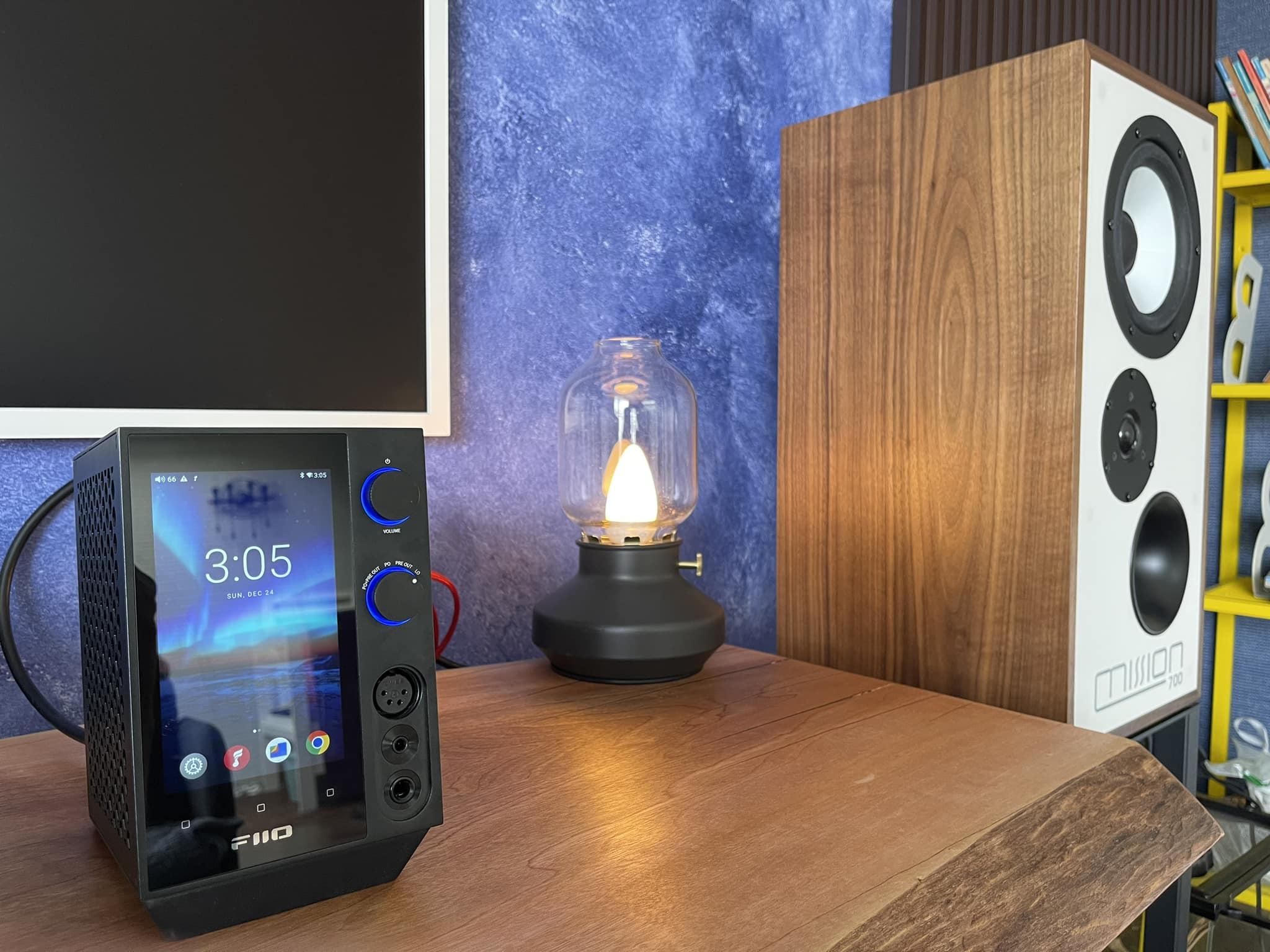
 This is my 3rd streamer for try out in the last 3 weeks.  The Fiio player is not new to many, infact the reputation for Fiio easily rivals Zidoo / Eversolo. Is a mature audio brand and I have personally listen to other Fiio product which have my attention over the years. Ever since the hype of Eversolo started, I am keen to really know the almost similar product which is the R7. I will say very close with the price and most of the functions and features. Definitely worth to take a look or listen compare to its competitor of Eversolo A6. 

From the outlook, Fiio is rather small compare to Eversolo. The chassis is plastic and Eversolo is aluminium which definitely feels better. The unit is pretty light weight too. Which is easily carry about if need to. From the front screen the layout is just like any mobile phone. I will say very typical Android style.  There are 2 knobs in front for the volume and input selection. I really like it to have the selection knob. The light around the knob is really a nice touch too. The interesting part is the headphone / ear phone jack on the front. For desktop setup, this is perfect. 


On the back is pretty comprehensive too. All the connection from analog to digital. One nice thing is the microsd card slot which is a lot easier to access compared to the A6 SSD which in under the unit. The other thing which I like is the unit can be use with IEC the usual power cord or with barrel jack for LPS. Many will say that LPS has the cleaner sound to it and Eversolo has to be modded for that. 

To get it started just simply download the Fiio controller app and firing up the unit is like any Android O/S totally feels like a mobile phone. Once is up, as usual go to setting and get it connected to the home wifi or Ethernet. Voila…..we are in business. Is a little buggy of the apps in adding the R7 for the first time. I have encountered the same problem with the Eversolo A6. I guess must be an apps thing. Once connected the layout of the apps is super simple. What is the important piece is the casting. With it simply everything is right in your palm. Playback of music can be streaming or local playback just like any typical android O/S. I am sure there will be no challenge for anyone to use it. It can access NAS and USB or internal storage without sweat. Infact the player can even play YouTube on its screen if that is what you want. All the usual streaming apps of Tidal, Spotify and Apple Music all readily available. Sign on to your Google account and all good to go. 


I will start with the streaming first with Apple Music. With the casting function is easily like playing music on my iPhone. The plus point is the Apple Music is natively play from the R7 just like the Eversolo A6. Both units did very well in this. Big plus for me or to all Apple lovers. Listening to Apple Music on the R7 is more enjoyable than the A6. Is less fatigue and is also more mellow without the harshness from the Eversolo. With the screen vertical layout is more user friendly than the A6 with horizontal layout. This is the first time listening on Stereo setup with proper Apple Music playback without having to connect the IPad to the unit. Is like dream come true. 

The next thing to try out was local file playback which is another nice touch with the casting app. Totally feel like a phone but seating 7 feet away. The output I am using is XLR. I am pretty much impressed with it. FLAC, DSD, WAV and almost anything Android can recognises will play. This little player without external DAC sure does sings pretty well. The sound is pretty airy. The sound stage big enough. The bass slam is all impressive too. Comparing it to the A6,R7 win over many different areas. When tested the XLR on A6 can be a bit over the top feel. All the components of the music just come out right. A little lack of details but what the heck. Is a good little box for all kinds of listening. Leaving it on playlist as background music fills the house. It does fit in for most life style and not just audio enthusiast. 

The downside is the apps is still quite a bit unstable. It at times can be really annoying to deal with. The USB output to external DAC is a little buggy as well which I have encountered once it doesn’t play. Probably is some firmware thing. 

Overall wise the Fiio R7 is a versatile player that ticks off many things. Nice piece of hardware for majority of lifestyles. Cool as it is and pretty neat for desktop use too. I think will be nice desktop computer using it like an external sound card or simply putting in the living room for all other music listening. With its small form factor can easily tug away in some shelf and it’s like having another display piece on the rack. With the price tag a little lower than the A6 is making it a real sweet deal. As the new Fiio R9 is coming soon, looking forward to compare it with the Eversolo A8. It will be the fight of the century 


January 4, 2024

Streamer Shootout! Fiio R7 VS Eversole A6 & A8 VS Lumin A2

At the end of last year, I am glad I have some good try out on some well known brands on media streamer or player. Searching for a good player has been going on for me ever since I started with Hifi back in 2007. Most obvious to start will be a simple laptop connected to a DAC. From a windows based laptop to Apple MAC and even some try on Linux operating systems. During the early days of streamer or digital playback is mostly proprietary O/S. As times past, Android has become the dominant O/S in almost anything "SMART". 😄 No pun intended. There is always some kind of limitation on the file format, or compatible DAC, or it can as simple as O/S limitation. It was long journey for users like myself and some good manufacturer of this wonderful players keep going to better of the audio and of course for easier use.


By chance or not, I came across this group of hifi enthusiasts from Italy and the start of sharing on ideas and time to design a simple O/S for the aim of best of class in audio quality and also needs to be simple enough for the "IDIOTS" like me. It was year 2009 which I participated with this very fun groups of people in working out a platform which is known today as "Volumio". During the early days, the O/S is based very on single board computers which is deem to be the most simple and simple is good to have the very least of any kind of interference or disruption to the audio. After years of development and contribution from many members in the group which it grows to the current Volumio 3. It has been a long journey of 15 years to come to this. I am really happy that a free O/S can come such a long way. That is right, I have been in using Volumio for past 15 years since version 1. I can tell you is a lot of pain to even use it properly in the early days with limited hardware support, and software bugs and so on. The list goes on like forever. Around year 2016, Asus launch its first single board computer which is the Tinker board. It has all the power which rival any single board computer. Later around 2019 it launch the upgraded version of Tinker board S which I have been using since 2019. I have always been on a lookout of what can be something more.

I was quite lucky to have the chance to try out some of the really amazing player which was recently launch few months back. Starting of with Eversolo A6 than A8, follow by Fiio R7 and finally the high end player of Lumin U2. To be fair, Everysolo and Fiio is not a pure player but a player with DAC and other functions. The Lumin U2 is pure player and nothing else. Just like the Asus Tinker board I am using which is a pure player only. There are 2 critical component of any player. The first being the apps as it is the heart of the control for any of the mention players. A good apps will ensure nice experience of playback and navigating. Above all it need to be user friendly. The second critical piece of course will be playback compatibility either locally on files or streaming. Cannot deny that streaming is the main stream of users varying on different streaming platform. In my opinion, for local need is probably Spotify, Tidal and Apple. The very least any player should be able to cover this 3 streaming platforms. Although the dominant O/S for media players is the Android but can't ignore the many users of Apple around. The Airplay is almost something cannot be miss out in most devices.


Among the few players I have been given the chance to try out, I will rank it on the apps perspective as below:
1. Eversolo
2. Fiio
3. Lumin

Eversolo has the most intuitive apps among all the 3 brands. It covers all basis from user friendliness to practical functionality. Fiio is very simple which mostly rely on the mirror function which practically what is being displayed. Pretty much have all the needs but really is just a simple app. The lumin being at the bottom with the apps being stable which is a good thing but user friendliness is totally out of the window.

On playback compatibility will be rank as below:
1. Fiio R7
2. Eversolo A6 and A8.
3. Lumin U2

The Fiio is the winner here with its compatibility being the most versatile with its capability to play almost any kind of audio offline or online. Eversolo is pretty almost as close as Fiio with some downside of the files format support. Lumin at the bottom with only support of Tidal and Spotify with Apple support. Also the files format support is less than any of the 2 other players.

Of course what is an audio player of not comparing audio quality which rank as below:
1. Lumin U2
2. Eversolo A8
3. Fiio R7
4. Eversolo A6

With sound quality as the measurement, no doubt Lumin win over the Fiio and Eversolo. This are being compared with all units being output from its USB to Wadia DAC to be a fair comparison for them. Playback from local files like Wav or DSD, Lumin comes out ahead to the other players. Even from streaming perspective the Lumin do win over all the other players too. I think is fair enough to say with Lumin being the most high end players in this comparison, it is expected of Lumin to perform better.
Time to wrap up on the streamer / player topic from what is being try out last year. In conclusion, the android players do very well in serving the needs of many functions and features. The A6 and R7 probably is the most value for money with the units pack with all kinds of inputs and outputs. The software itself is like a box of candies. Its just full of goodies. The audio quality wise is definitely more than the average on most players with same price point of RM3,000 or so. The more expensive A8 is quite a big jump from the A6. Having a price tag of a little more than RM9,000 is not a small price. Definitely, for someone who is looking for full box of functions and audio quality is a good choice. Finally, the Lumin U2 with over RM20,000 price tag is really the big boy. I am sure there are many consideration for something of this price point and even more so to compare to similar price range unit.


On my personal journey of things, it is quite an ear opening or eye opening as well on how much things have change for streamer / player. Of course while trying out all the wonderful toys, naturally I am turning back to my own unit of Asus with Volumio as the O/S. In term of versatility of the player, Volumio is quite the clear winner among all. I have never came across an audio player that is able to play anything from an audio format. Digital is always the challenge with all kinds of format you can think of. Some might be more common than the other but there is always some odd ball around. When comes to GUI, the intuitive of the apps developed to Volumio is almost second to non. Even the Roon with its pretty nice GUI at most is the same as Volumio. The thing that Roon win over is the many hardware that adapt to it which makes Roon very successful and also making it quite costly. The comparison of Asus with the other players again with USB output to Wadia DAC is still the most all rounder with all kinds of genre being play. It can be rock, jazz, blues or pop, to disco. I am not sure about what other audio enthusiast will be listening to but for me, I will listen to almost anything under the sky. My personal preference is mostly rock or pop songs. Occasionally some electronic music with disco music too. I am confident to say at this moment, I haven't found something that is able to replace what I have still in the source player of digital. I am also lucky enough to listen to this little board on some very high end DAC with stellar price tag and I am surprised how good the outcome. Perhaps , my aim is not on the source player but should be on the look out of the next DAC.


October 9, 2023

Revelation Audio Labs Passage CryoSilver Reference DualConduit DB25 Umbilical Cord Upgrade for Pass Labs Preamp

 Posted by Tan

I was thinking about what I could do to improve my system further short of upgrading any of the main components and without a major financial outlay. My mind turned to cable. As I had been pretty happy with the cable combination I was using, from power cords to interconnects to speaker cables, I thought of one cable in my system that I had not done anything with, which was the umbilical cord that went between the 2-chassis Pass Labs XP20 preamp that connect the separate power supply to the main body. 

I had been using the umbilical cord supplied by Pass Labs with the XP20, a DB-25 cable similar to the parallel cable used to connect to our computer to a printer before USB connection became ubiquitous. Just that Pass Labs' version looks chunkier, felt heavier and is of a better build quality than the printer type. 

I googled to see whether there were any 'audiophile' DB-25 cables out there, the picking was indeed slim, I came up with just a couple, which was not surprising as the market for such cables must be very small. 

I chose to go with Revelation Audio Labs from the US (http://www.revelationaudiolabs.com/cables-power/index.htm, they make power cords, interconnects and speaker cables in addition to a few types of umbilical cords used in various manufacturers' products) as their version looked particularly well made, but of course I was purchasing on faith and luck as I had no means of testing it beforehand, being thousands of miles away.


Purchases with Revelation Audio Labs can be made via their website or ebay, shipping is free worldwide. The standard 0.75m length for the DB-25 cable costs USD999 and add US189 for every additional 0.25m. I made my enquiries and duly placed my order. During the (anxious) 2-month wait for the cable to arrive, my queries on the ship out status was promptly replied by Revelation Audio Labs, and there was no hiccup in the final delivery. 

Indeed, when I finally had the cable in hand, I was impressed with the build quality. The cable is made up of 2 separate cables intertwined into one. It has a wider girth than the Pass Labs' version. Revelation Audio Labs says that the analog power supply voltages is separated in a dedicated discreet conduit from the digital control signals within the cable. The connectors at both ends are mil. spec. Amphenol male-to-female DB-25 connectors and solid cast metal shielded shells. 

The cable is somewhat stiff but as my preamp's 2 chassis are placed closed together I had no problem in connecting them.

I thought I had to let the cable run in for a while before I could discern any significant changes but I didn't really have to. After I swapped in the new cable and pressed play on my cdp, I could hear clear changes, nay, improvements in my system's performance immediately (Revelation Audio Labs says that they run-in their cables before shipping). These improvements were consistently heard over the next days and weeks.


The immediate sensation I had was that the noise floor was lowered. The vocal and musical instruments were now playing on a darker background, the body of each became a tad cleaner and clearer, but the air around each, and also of the recording venue, was not diminished. In fact the ambiance in the recordings was further enhanced and easier to discern. Additionally, the little edginess in the highs in some recordings that I thought was from the recordings themselves was either diminished or eradicated entirely, the highs became just that bit smoother and silkier. 

With this, many low level details became more apparent, it was like turning the focus ring on a camera lens just so slightly to improve on an already good focus. What I thought was extraneous noise on some recordings before was actually little details captured, such as an unintentional touch of the finger on a string, or a soft smacking of the lips by the singer. Nuances and vocal inflections in the artists' performance were also better resolved, heightening my listening enjoyment. 

One improvement area that I thought was worth the entire upgrade cost alone was the bass. Bass became more impactful and better controlled. Bass notes were also better defined. On plucked double bass for example, the body of each note was better delineated, and I could hear the start and decay of each note more clearly. 


I am really impressed with the Revelation Audio Labs' DB-25 umbilical cord. It is a significant improvement relative to the outlay. If you have a Pass Labs preamp with external power supply, you owe it to yourself to try out this umbilical cord upgrade. This is a great product, highly recommended! 

September 21, 2023

A Post Modernist? Kenwood KX-5010 Cassette Deck

The Kenwood KX-5010 with it's accompanying original remote at press photo

What does one do after making possibly the best sounding product of an era? Well, Kenwood like so many other companies, started introducing convenience features. You see, the Kenwood KX-880G and all it's others in the series managed to stay in production from 1982 to 1989, in any industry especially consumer products, 7 years product life span is a mighty long............ time. In 1990, a new decade, Kenwood introduced the new generation of KX series cassette decks, now modelled as 5010 & 9010.

Both KX-5010(a 2 head, single capstan transport) and it's top of the line model, the KX-9010(3 head, dual capstan transport), now comes with remote control, a large horizontal FL display, neatly integrating the tape counter, tape type & L/R peak level meters, in an attractive yet easy to read from a far design. Styling wise, this is the biggest improvement over the KX-880 & 1100 series design, while novelty was nice when it lasted, now seems so very dated, especially that vertical L/R peak level meter in which the fonts used were too small to be seen from a far. Most transport control buttons were carried over to save cost as by the 1990's CD players have began to dominate the music format as source & cassette starts to lose it's dominance. So new models with carry over parts bin was a logical and clever move, costing wise when launching a new product. Car manufacturers do it all the time!

The back panel also has system remote trigger jacks, if you're into an all singing & dancing Kenwood stack system

Extra features are always welcomed, and that includes the ability to make a one touch test recording of about 30 seconds after blank tape is inserted, then automatically rewinds and playback the result for your sound quality evaluation. one can repeat the process several times at a touch of the "Record" button, until satisfactory sound recording setting is achieved, before goin for the full tape recording. It's like having a 3 head tape deck feature with 2 heads only! Another feature which I absolutely love about the Kenwood KX-5010 is the Direct Drive transport, despite being a single capstan transport design, wow & flutter spec is only 0.25% low, which many dual capstan design transport probably also cannot match. I now find Direct Drive transport very good with pulling power, especially during playback of old and sometimes slightly sticky tapes. When other decks are struggling, the Kenwood continue to play with stable speed. By the way, the Direct Drive feature is not new, but carried over from the previous KX-880 series.

I think Kenwood KX-5010 had a strong foundation to build upon, being based loosely around it's very capable predecessor of KX-880HX. Will it sound as good, with added features?

The internals also looking very similar to the older KX-880G!

Opening the cassette door reveals the single capstan, 2 head transport

Let's find out! From the first tape playback, the performance similarity to it's predecessor, the KX-880G is obvious. Crystalline clear tonality, speed stability, punchy bass and highly extended treble all shines through. However, I have 2 doubts started developing after a few tape playback. First was bandwidth, with familiarity, I just felt that perhaps the band width of the KX-880 series was still better in the regards, because the highs were more liquid, had less white noise. Next, another area the predecessor also did better in terms of micro dynamics, especially in tracks where double bass, or bass guitar plucks & piano pings were prominent, the older model certainly offered much more clarity on the proceedings.  In other areas of the performance of the KX-5010, the sound was clearly cut from the same cloth as the KX-880 series, just with a few more rough edges only. Both shared a similar tonal quality, stable speed & dynamic overall sound. Maybe in some cases, if remote control, post modern styling & recording feature is your thing, then the Kenwood KX-5010 cassette deck is up your alley. 

This Kenwood KX-5010 unit is in great cosmetic condition and comes with per-programed after market remote, supplied by mu buddy, Oh. Please contact him if one is interested in purchase of this deck. His asking price is not high, for a fully reconditioned unit which looks & sounds good!

However, if one priorities cassette playback sound above all else, then the KX-880G in which I previously reviewed, is the much better defacto choice of the two. I have made my choice the moment I heard the KX-1100G, in which playback sound performance wise, opens up a whole new level of performance over both the KX-5010 or KX-880G. The 3 head machine just cost much more, that's all!

I am now really starting to believe a folklore amongst cassette deck communities, that the best golden age for really great sounding decks were made from 1978-1982!  This due to the fact that as I narrow down my to keep cassette decks to last 5 surviving, despite the many I have written about here, I just realized 2 out of 5 in my collection are from the 1982 year,  That's kinda significant. Don't you agree?

August 23, 2023

Old Gold! Denon DCD-3500RG CD Player

The official release photo of Denon DCD-3500RG CD player back in 1989, that's 34 years ago!


As you keen followers have noticed, I have gone in to reverse gear when it comes to hifi since the last couple of years. I usually do not go too far back, but have stuck to the time line of 80's & 90's classics, that's like 30 or 40 years ago, which I felt hifi was at it's last golden age. This Denon DCD-3500RG CD player is probably one of the flagships made by the company over the years. I've had various Denon products over the years, and they are always technically correct in sound, but just never really hit my heart strings. However, this Denon CD player promises to be something different, and I've been waiting for my chance to find out since like 25 years ago. I was always eyeing for a good condition pre-owned unit for sale, but either I was always too late or just got distracted when one became available.

This unit belongs to a friend and as he was getting bored with it, fancied my proposal for a swap with my Teac VRDS-20 CD player, he wanted a small top up but that's fine, since I was bored with the Teac too. For me after a while the Teac with it's VRDS transport should have shined, but never got me emotionally wowed with music. Maybe it wasn't meant to be for me..........   

The CD loading tray come with built in suspension! A feature that is deemed redundant by now.

The Denon DCD-3500RG was launched in 1989, just towards the start of 2nd generation of CD players and it still have many features from the first generation machines deemed un-necessary today, like the suspended CD loading tray, the top Sony KSS-151A CD transport with magnetic rails, track programing calendar and best of all not only wooden cheeks, but the whole top & side panels are real wood finished in dark tone Urushi lacquer, which is very classy. Now a days, if you want your hifi equipment to come with that Urushi lacquer, be prepared to spend at least 6 figures or more! However, for the unit that came to me, that Urushi wood panels were termite infested and I had to sadly remove, throw away, and make new Nyatoh hard wood panels for it! The results, while not glossy like the original Urushi lacquer, came with it's own unique hard wood surface texture charm which is still nice. I can't get anyone to do Urushi lacquer restoration for me locally. Lastly this Denon uses a theoretical 18 bit decoding, courtesy of 4 units Burr Brown PCM58P-K, 2 per channel for balanced circuitry linearity. 

The Denon is another satin gold(not Champaign gold, as the tone is less rich, and a bit pale in comparison), battleship build quality CD player that weights in at 22kgs, came with all round copper coated 2 compartment chassis, which on the left was 2 power supply transformers(1 for audio & 1 for digital, so it says) at the back and the Sony KSS-151A transport in front, with the right compartment holding the dual mono audio PCBs. Very nicely organized. The front fascia is relatively clean with just a few buttons flanking the big CD tray & FL display, all other lesser used buttons are buried inside a flap below.  The back panel has the usual digital output, RCA & XLR audio outs.


The insides of the Denon DCD-3500RG CD player. Nice, right?

 
To reduce fascia design clutter, only the most frequently used buttons are left on the outside, all other buttons are hidden behind a drop down flap below. 

The back panel outputs.


My Denon DCD-3500RG after the wood panel changed, looks quite different doesn't it? Some may say the different wood panels will color the sound differently, but I didn't really heard that.


So far so good, however for a Denon, this CD player is really sounding something else! From the first CD play, I was transfixed by the sound. The bass was strong, bold and tuneful. The mids are slightly recessed, a little laid back but still very engaging. The highs are super refined, very airy but will bite if the music calls for it. The sound stage is big, but very laid back. Overall this CD player certainly has the PRAT factor, which make music very enjoyable. So far all is good, but comparing to my stable of CD players, this Denon does not sound as dark in tonality vs the Sony CDP-X7 ESD, it self a 1988 product. Then comparing to the Accuphase DP-70V which is a more aspirational product and priced(at least double?) to match in 1992, the Accupahse offers slightly more clarity, less digital haze(compared to both Sony & Denon), gives better mid range texture and just maybe slightly better micro dynamics and transient. If there's any comparison I would say both the half priced Sony & Denon offered possibility 85-90% of what the Accuphase can do. However, with most pop & rock recordings it's not easy to tell them apart. Only certain high quality recordings that truly allows the Accuphase to shine, put it on the pedestal, so to speak!

An area I do not like about the Denon is that it doesn't play CD-Rs & scratched disc too well. Only well kept original CDs will do here. But for me, this is no limitation, as I have the other 2 CD players in my stables that will play any disc any condition, especially the Accuphase. I strongly suspect the Sony KSS-151A transport laser in the Denon to be in it's last legs(since 1989!) and it will be a costly affair to source for replacement once dead. However, I feel this Denon is worth saving and to keep it going if the worst should happen. 

Even then, the Denon DCD-3500RG has been in my stables for over a year, and I must say that I've totally enjoyed it's musical company so far, and will be in my stables for a long time to come.

August 20, 2023

The Last Of A Kind, Teac V-7010 Cassette Deck

The Teac V-7010 finished in Champaign gold, and dark colored wood cheeks, tape counter window & transport buttons on the left, peak level meter display with recording level knobs and selector on the right! The whole fascia design is very elegant with this nice Champaign finish.


Teac was probably the last of the cassette deck manufacturers to issue Dolby S noise reduction system in their product line up, by 1993 in the V-8000 series. That makes the 1992 Teac V-7010 the last of the Dolby C equipped TOTL deck by then, which itself is a facelifted model of the V-7000 series launched in 1990. By the time of the Teac V-7010, ten years has passed since the Kenwood KX-1100G that I last reviewed. The newer Teac has broadly similar specs to the Kenwood, except for the motorized tape well door & remote control capabilities. By this time in 1992, the CD format already reigns supreme at home hifi front, but in the car audio world, CD players were still a novelty, as manufacturers were finding ways to isolate the CD transport from the car's suspension movements which adversely affected the playback smoothness of the CD transport. CD players in cars would only start become the mainstream just before year 2000. Hence the market for cassette deck at this stage, was shrinking fast.
  
The Teac V-7010 is a nice weighty machine at almost 10kg, thanks to it's real wood cheeks & multi compartment for rigidity chassis, which is distinctively divided in to 3 unequal areas, on the left is power supply & regulation board, the front middle section is where the 3 head, dual capstan, direct drive transport remains isolated in it's own compartment, and the rest of the area behind the transport compartment & right side of box is dedicated to audio recording & playback circuitry. While some people may comment that the Teac V=7010 looks very spartan inside, I think that was possibly in the design brief to make things as simple as possible for shorter audio signal path to good sound.   

Inside the copper shielded chassis, the Teac V-7010 was the last to get this premium treatment, as the Dolby S equipped V-8000 series released in 1993 no longer have this treatment. 


As I have just taken delivery of the Kenwood KX-1100G about 2 months ago, along came this Teac V-7010 in which I was offered first right of refusal by a buddy who no longer sees the need for it. It was a hard decision for me as I am still warming up to my new toy, and I had secretly harbored to someday get a Teac V-970X which is another TOTL cassette deck from another by gone era. So the Teac V-7010 didn't exactly fit in to my plans, but I went to see it any way, how could I not?

At first glance, I have fallen head over heels for the Teac V-7010, this example in mint condition, finished Champaign gold, dark wood cheeks & a look behind the back panel which still has the importer(Auvi Malaysia Sdn Bhd) warrantee sticker on it, really just blew my mind! I could remember I was just a young adult at the time, just starting my first job, marveling at what was possibly this very unit on display at Auvi's showroom in SS2(which later became the iconic Mungo Jerry BKT shop), which I could not afford it's grand asking price back then. The icing on cake was that my buddy said, "this unit just came back from service by Mr Oh!" and that statement, sealed my fate! I was a happy dandy walking out from my buddy's house, with the Teac V-7010 in my arms.

This remote is from the same vintage but made for the model Teac V-5000, which has a belt driven 4 DC motor transport supplied by Sankyo.  The V-7000 is a direct drive transport supplied by the same manufacturer.


I went straight home, unplugged the Kenwood from my system, swapped the Teac in with high anticipation, and from the first time I pressed the play button, heavenly sound was coming from the tape format. Coming from the Kenwood, The Teac immediately impressed with it's quiet transport, no clunky noise here or there. Next the high frequencies were well extended with good refinement, the mid range has a lower bloom, which makes vocals sound like it has more meat compared to the Kenwood, and the bass is as solid & as tuneful as the Kenwood. Speed stability is impressive as well , just like the Kenwood, is direct driven. I am beginning to see that direct drive transport designs do have their advantages over belt drive designs. Being direct drive doesn't mean there are no pesky transport rubber belts to deal with, but just lesser only.  However, in terms of sound stage, the Kenwood does throw a wider & deeper, plus more layered picture. For the Teac, this was was a slight downer, but it's OK, the V-7010 still sounds very good by the way.
An official photo release of the Teac V-7010 cassette deck. 


Due to the unit didn't come with the originally issued remote control as my buddy had lost it during his last home move, I felt the unit was some how incomplete. So I scour the www in search of hopping to find one for sale, and after 2 weeks, found at remote specimen for sale at Yahoo Auction Japan. While this was not the exact original, which has a few more buttons, it was close enough and the asking price was sensible, unlike those Sony ES series remotes. About a month later the remote arrived and works! I later found out the remote unit I bought was for the Teac V-5000/5010 was has the missing open/close function for the tape well.

In a way, getting this Teac V-7010 cassette deck made me forget about the Teac V-970X as an idea, as I am blissfully enjoying what I got now. Some times, I guess fate does not give you what you wanted, but even then when you've being given something else, you'd be thankful with the end result. For me, I am enjoying my cassette deck collection journey to the max now!