July 11, 2022

Delightful digital !

 USB - Is it a bane or a wonder for digital world in audiophile ? USB or Universal Serial Bus is a universal connector can be found almost any where in digital world from computer to mobile devices and almost anything digital like TV or an amplifier. We cannot deny that USB has become an important part of life while we are using the digital device. What about the context of USB in the audio world ? Well USB is mainly being use for many different hardwares like AV receiver, an integrated amp or most of the digital playback. Although USB is a very useful connection but is also well known for being noisy or not so perfect signal. I am sure many will think about error correction and such but in reality is not what we all think. If you are not someone who agrees with this than probably is time to stop reading. 

Now for those who want to look for the improvement of USB in your audio, this is one piece of hardware that is going to do the job. Today we are going to be talking about Innous USB Phoenix, a USB re-clocker. Pretty fiery name to called the device "Phoenix". A little bit of background of Innous. Its a UK based company founded back in year 2009. Not too old or too young, is almost the time that digital audio getting heat up. The company aim is to have digital audio quality with simplicity. The picture here with the introduction of the re-clocker.


From the outside (Top and Bottom), the hardware is 2 pieces of metal. The top cover and the bottom base. Simple yet solid box for the unit. 3 pieces of legs at the bottom with rubber ring and a little suspension from the leg to the bottom plate. The unit  about shoe box size but the weight is about 9kg for a small box. Majority of the weight is due to the transformer inside it.


Once the cover is lifted, the belly of the beast is revealed. The component arrangement nicely done with possible of shortest route for the wiring. Cables are properly arranged and also as much as possible with similar length. 


The toroidal power transformer made by Innous in house. Pretty big piece for a USB re-clocker. As for any audio product, the power supply is always important. No doubt that Innous do want to give the best for this Phoenix. 


Innous spare no expense to give what is best possible. When comes to capacitor (Mundorf) is like the gold standard. Of course is a pretty penny on this. Each of this Mundorf capacitor has10,000 μf.
This is a lot of capacitance for re-clocker. 


Than it comes to the heart of it all. The clock and the USB chip regeneration. The Phoenix USB Reclocker takes the USB signal from any source and completely regenerates it to an extremely high-precision signal to feed into your DAC, allowing it to perform at its best.


Next will be how it is connected link up to your chain of equipment. The simplicity of the re-clocker is allowing any kind of USB playback to be use with it. It can be a simple laptop computer, or digital steamer. The simple rule is as long as it has USB output from it. Simply plug it in and switch it on. Looking at the back of the hardware is as simple as it can get with one input and one output for the USB. On the right side is the on/off switch and the power cord. The input is from the source. It can be a computer or any digital playback device. The output will be from the re-clocker to the DAC. Once connection is all plug in, what you have to do is just to turn on and play as usual. Simple 😏


For myself, I have always been the fan of single board computer. I have hook this up to the USB of the Asus Tinker board. From it output to the re-clocker and than to the DAC. 


I am going to up a simple summary on this box. Not going to go into the detail of what I heard or what I think about the audio but I will say that its something I will miss. What I mean by that, I have been using it for 2 weeks now. Taking it out of the chain I can definitely notices the difference. Is this an upgrade, my answer is yes. It might not be for everyone unless you are very much into USB connectivity for your audio. This box will cause you quite a few penny, being SGD 4000. Not easy to justify for it, is also subject to what kind of level in audio nirvana you want to reach. Simply to put it when you are starting of zero, any small thing will be quite a jump but when you are at 80% level, to squeeze another 5% is not going to be the challenge not just the setup but also to the cost of it. 


July 3, 2022

A Winner! No Matter Which Way You Look, Tonewinner AD-1PA Power Amplifier


Tonewiiner AD-1PA is a solid power amp, weighting 40kg each! I do however find the front panel styling to be bland, blue LEDs aside

In Chinese business, a prosperous or auspicious name is very important for a good start, and Tonewinner is probably one such brand! When Audio Art started selling Tonewinner products about 2 years back, I remembered asking for a review sample, to which Ah Chee replied, "no need to review, this product sells by it self!, as nothing beats great quality and excellent price".

Fast forward till recently, my very own ATI Reference 6004 power amplifier was starting to act up after being in constant service for the last 6 years or so. The problem is one particular channel would shutdown prematurely constantly. So it was sent back to Audio Art for repairs. Ever accommodating, Ah Chee asked if I needed any courtesy amp in the meantime? I said "yes please!" and a few days later, 2 units of this Tonewinner AD-1PA came to my place. I asked why 2 units, Ah Chee replied, "I can still remember you're bi-amping kaki"   

The back panel is simple as should be, with 2 pairs of speaker terminals per channel

Actually, a few months back, I already got a glimpse of the Tonewinner AD-1PA in a friend's system, where he had the full set Tonewinner, from CD player to pre amp to power amp, driving a pair of Rogers LS-3/5A speakers. The sound from that system was very attractive and confident, which I kinda like. Now with the 2 units AD-1PA in my system as left-right mono block bi-amp set up, I was ready to fire up the system. The AD-1PA is mated to my Aesthethix Janus Signature tube pre-amp, which controls volume and switching between the various sources in my system.

Upon firing up the system, I already heard a very nice warmish tone playing in Class-A mode. I switched between Class-A and Class-AB modes, but found that I like the former sound better. Class-A runs the heatsinks hot, but not as hot as like those of my Pass Aleph 0 back then which will always be one of my reference power amp design. In Class-AB mode, the Tonewinner is just cool in temperature all the way. I let the subject matter run in for a few weeks before any serious listening session starts.

This is where it gets serious, in Class-A mode, the Tonewinner has a slight golden warm tonal quality, as opposed to low noise floor, high resolution & crystal clarity kinda sound that today's common amplifier sound. Not that Tonewinner has much noise floor or suffers in poor resolution either. It just doesn't shout those parameters only. With Tonewinner, the voicing is clearly focused on that slightly golden mid range tone, that refined airy treble, and solid, quick & punchy bass!(This is an area where the Pass Aleph design is clearly weakest) Also again comparing to my Pass Aleph reference, the Tonewinner has near zero white hash in the back ground. The Tonewinner doesn't shout high resolution either, yet, if the source captures it, it will be clearly laid bare to listen, albeit in a much subtle manner. Still in comparison to the Pass Aleph 0 which is a single end Class-A amplifier design, I feel the Tonewinner manages to avoid all the weaker points of the older Pass design, namely the Tonewinner doesn't go in to rose tinted mid range. The Tonewinner manages to balance between the treble refinement versus saccharin sweetness in high frequency response, and best of all the Tonewinner never get weak in knees in the bass area, much unlike the Pass Aleph.

When listening to the Tonewinner, I feel the Chinese had voiced it so finely balanced, not one particular sonic signature is ever more dominant. In the past, if one has to choose between tonal quality & sound stage, there is always a dilemma. With the Tonewinner, you can actually have both, and don't need to choose anymore! The scaling and sound stage to the Tonewinner is big scale & 3D. When playing in my room, my PMC IB-2i speakers disappears most convincingly. In many ways, the Tonewinner is voiced very much like an American muscle amp, the kick ass bass power, the textured presentation of instruments, and the big bold scale, all the very qualities I love in a power amp.

I only played the amp in Class-AB mode just for comparison sake only, but what I found was that music became flat without that slightly golden midrange tone, and the bass while still solid, has lost much it's kick, but does sound more refined, in a less textured way, much like a Lexus refinement, which just needs a bit of soul. When in Class-AB mode, the heatsinks are cool to touch and there's a feeling that the amp is just cruising only. After one session, I very quickly reverted to Class-A mode, heatsink expanding sound and all, if one is familiar with Class-A amplifier designs from the 80's. 


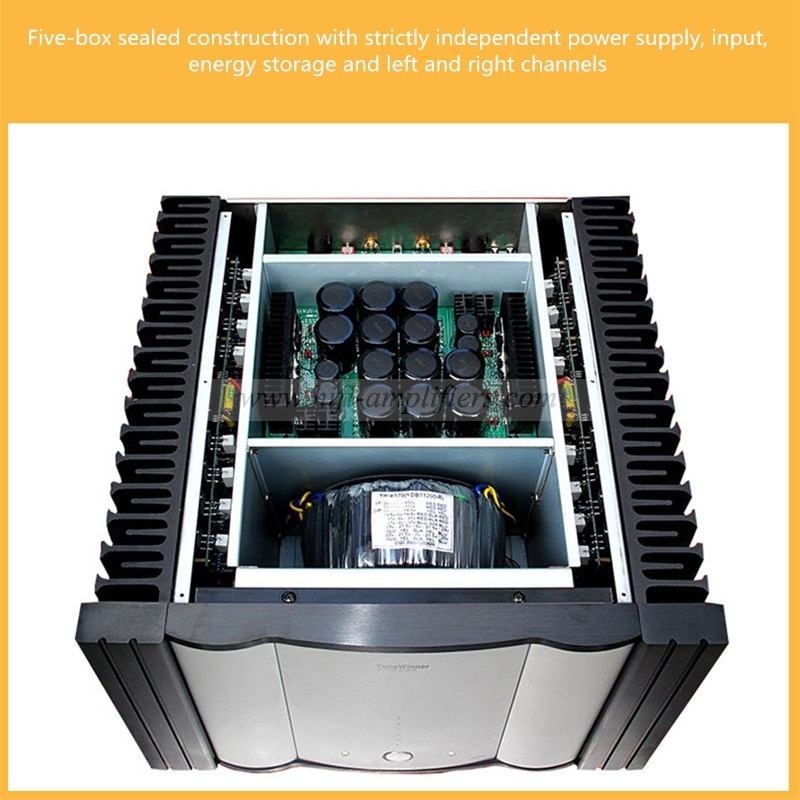
The insides of the Tonewinner AD-1PA is seriously designed with audiophile cues all over 

Here is showing off it's amplifier module coupled to the whole heatsink panel at both sides of the power amp

I got too excited and jumped straight to the sound section! The Tonewinner amp is rated 300W x 2 in either Class-A or AB mode, and when both amps operating in Class-A, actually draws close to 7 ampere in current. The AD-1PA is very solidly built too, at 40kgs each. Moving them up the flight of stair case to my man cave is a back breaking process. There are plentiful of audiophile cues in the build quality of the amp. Starting with the full aluminum, 5 compartment design chassis which isolates every aspect of the amplifier components from one another. The power transformer just behind the front panel, the power supply reservoir and regulators in the middle, the input board placed behind the rear panel, and the actual power amp section at both sides bolted to the heatsink as a module. Very nice indeed, but that's not all, even the four feet at the bottom corners are of honeycomb molded!( Looks like they learned a thing or 2 from Pioneer too!) My only gripe is that the front face plate looks a little on the plain Jane, in the silver and black surround design. Three function buttons are on the face plate, the big center button is an ON/OFF switch, the smaller one on the left selects the ClassA or AB mode of operation. A small button on the right functions as speaker terminal set A/B select. Pretty simple so far.

On the back panel, Tonewinner provides a choice between RCA or XLR input, with a selector in between and 2 pairs of speaker terminals on both left & right channels. An IEC power socket rounds things up. While the overall build quality is excellent throughout, the only area I think it cold improve is the heatsinks on both sides, which are still rather sharp and can potentially cut fingers or hands when attempting to move the amplifier.(Ah........ just like my favorite Pass Aleph amplifiers again!)    


With the Tonewinner AD-1PA pair in my room, I barely have space to tip toe around to the racks! 

At this point in time, I am still pondering if I should make the pair of  Tonewinner AD-1PA my permanent amplifiers in place of the ATI Reference 6004. The 2 box configuration really does take up much space, leaving me to tip toe around my system as I load my CDs or LPs at the racks. However sound wise, the ATI, despite being rated as 350W x 4, doesn't quite sounding any bolder or louder either. There's certainly a lack of that slight lusciously golden mid range tone, and that airy refined highs that my ears take comfort in every listening session with the ATI as compared to the Tonewinner. I have probably said this too many times already, but made in China hifi has come a long, long way in the last 30 years or so.

And at almost MYR13k a pop, or double that in my case, means spending some money again. Don't get me wrong here, at the asking price, the Tonewinner AD-1PA is not expensive at all, and given today's hifi inflation rates, it's probably some kind of a bargain even. When you factor in that winning Class-A sound quality, one can even spend double or triple the Tonewinner's price and maybe, just maybe can look forward to slight improvement in sound quality???

And that is the big question mark, that one will probably have go and spend 6 figures on an amp, to get some kind of meaningful sound quality improvement over the Tonewinner's asking price. As I deliberate on my hifi spending............................... Stay tuned!     


June 26, 2022

A Worthy dbx Successor? Yamaha KX-1200 U Cassette Deck

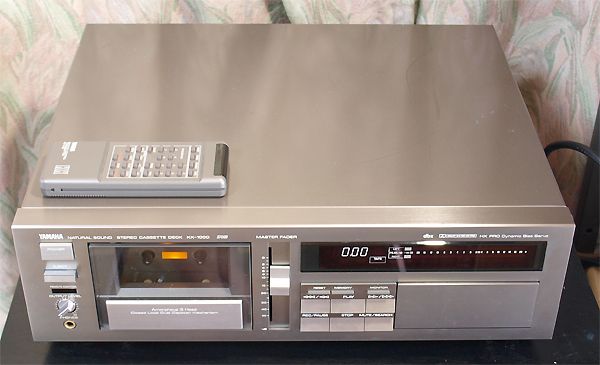
The Yamaha KX-1200U sitting pretty in my usual rack. Love that titanium silver color scheme, if I have to choose a word for it, it would be CLASSY!

Since my experience with the Yamaha K-1X or KX-1020 depending if you're in the Japan or the rest of the world, I have a very different view in regards to Yamaha's credentials when it came to their hifi equipment. Oh, my buddy has a unit of the Yamaha KX-1200U cassette deck, the 1987 successor to the K-1X which is currently in my care. The KX-1200U  had a production run of 6 years, which lasted till 1993, demonstrating the sales success of the model in question. Oh said I should compare both the K-1X vs the KX-1200U to confirm his own observation.

Styling wise, the KX-1200U carries over the K-1X practically lock, stock & barrel, sans a small window at the bottom of eject button for remote sensor. Power up the unit and that bold red/blue fluorescent display typeface has given way to a more refined yet at the same time more generic typeface looking whitish fluorescent display. Like the K-1X, the KX-1200U comes in both titanium silver or satin black color scheme. I found the titanium silver color scheme on this unit very classy, and will almost certainly prefer it over the satin black. Weighting in at 7.9 kgs, the KX-1200U is exactly 1 kg heavier than it's predecessor. However, a simpleton audiophile likes to view on the subject of build quality by weight, that it seems heavier is better? 

Build quality is the same finely measured compromise between cost vs luxury build. On the front panel, that lovely all glass & aluminum sandwich cassette well door is nicely carried over but now with tint. The cassette well illumination is improved as well, now with a tape center back light and a top light, which is super useful when the need to perform tape head and capstan pinch roller cleaning. All other front panel layout remains exactly the same as it's predecessor, including the six major transport control keys & that flip down panel for recording control knobs and Dolby selection. This Yamaha still came with dbx NR system, but is now the simplified dbx type II prefix, which is deemed to be less extreme in effect compared to the earlier version. By the way, that chunky looking feet at the bottom is still decorative plastic, no ceramic or stainless steel here!

Either way you look, the Yamaha KX-1200U is very nice! 


There are some changes elsewhere too, such as the Sendurst tape head is now the harder wearing amorphous type for long service life. Did I mentioned a wireless remote is now offered with KX-1200U as optional or standard? By the way, the review unit didn't come with the original KX series remote, but nevertheless came with a compatible remote which worked for most transport function. Still on the mechanism, the KX-1200U also does track search, and program play sequence too! Stuff that I don't advocate to use as it may wear out tape head. Otherwise the 3 head, dual capstan transport is pretty much the same. Cassette eject is still non-motorized mechanical.

A close up of the 3 motor Sankyo supplied transport & amorphous tape head


So far so good, Yamaha seems to have added much more convenience feature in to the KX-1200U over the older K-1X, which is good. Moving over to sound quality however, there were also compromises compared to the former. The first thing one will notice, coming in straight from the K-1X is the reduced headroom & dynamic bandwidth. The highs less airy and mid range less sweet. The bass, less kick ass.

I would speculate that due to the need to cater to the older more extreme dbx NR system the K-1X super boosted all the attributes I mentioned above, especially the headroom and dynamic range. The KX-1200U sounds more comparable in character to my other reference, the Akai GX-95 MKII, i.e., is the cassette format sound character. I believe that the K-1X sounds the way it does is due to the dbx NR system it deploys. And with the KX-1200U, Yamaha has chosen to fall back in line with other cassette deck manufacturers. I know that from what is described above, it would seem that the KX-1200U sounds disappointing, but that is only if one is coming from the K-1X predecessor. If one is coming from something like the Akai GX-95 MKII, then the playing field begins to level. And the KX-1200U is a pretty good sounding deck. It got a super strong transport that plays certain tapes that other cassette decks have given up on. I love the refinement the new amorphous tape head brings along with a more neutral tone, compared to the K-1X. The KX-1200U is also more transparent sounding too, by the way. So it's not all bad, but compromises, clearly a few have been made.  

On the inside, noted that big potted power transformer, not many cassette decks feature that. Also note the dbx NR PCB standing up right from the main board on the left! 

Even the wireless remote is color coded to match either Satin black or Titanium silver color scheme 

There's even a deluxe version in Japan domestic market only, come with wood cheeks, whih to me at least, is a must have for all top of the line products!


The Yamaha KX-1200U is still a very good deck after all, otherwise it wouldn't have a 6 year production life span vs the 2 years that it's quirky predecessor enjoyed. The fact that I liked the quirky K-1X so much is because it's exactly the kind of kinkiness for my personal preference. The KX-1200U on the other hand, goes the more prudent & for the lack of better terms, generic direction. And I guess that's why the KX-1200U is the much more successful in the longer term. May be I sum it up this way, about the 2 sisters. Older sister is at once exciting to be with, totally punk style colorful and has wild character to match, you gotta see her quirks as an abject beauty. The younger sister is more traditional, girl next door type, which in the long run, probably make her easier to live with, once the initial excitement has worn off. 

In the used market, now going for about MYR 1,800 a piece, the choice is yours, and Yamaha being not all that popular back then, doesn't really offer much examples in the market.

June 18, 2022

Northern AV Show Report

The Northern AV Show was held at Ascot Gurney hotel over the last weekend of 11-12 June 2022. As part of the organizing team, it was our duty to ensure a good show for all stake holders, namely Penang State Development Authorities, exhibitors and finally the show goers.

Here's a pictorial with some personal comments below:

Officiating the Northern AV Show, from left: Ashwin, YB Yeoh Soon Hin & our very own Wilson Teoh

Getting YB Yeoh in to the AV hobby!

The show not only featured hifi, but live acts too, seen performing here is EB Duet

CMY brought all their big brands on display

Some pretty nice Canto-pop tunes coming out of this system

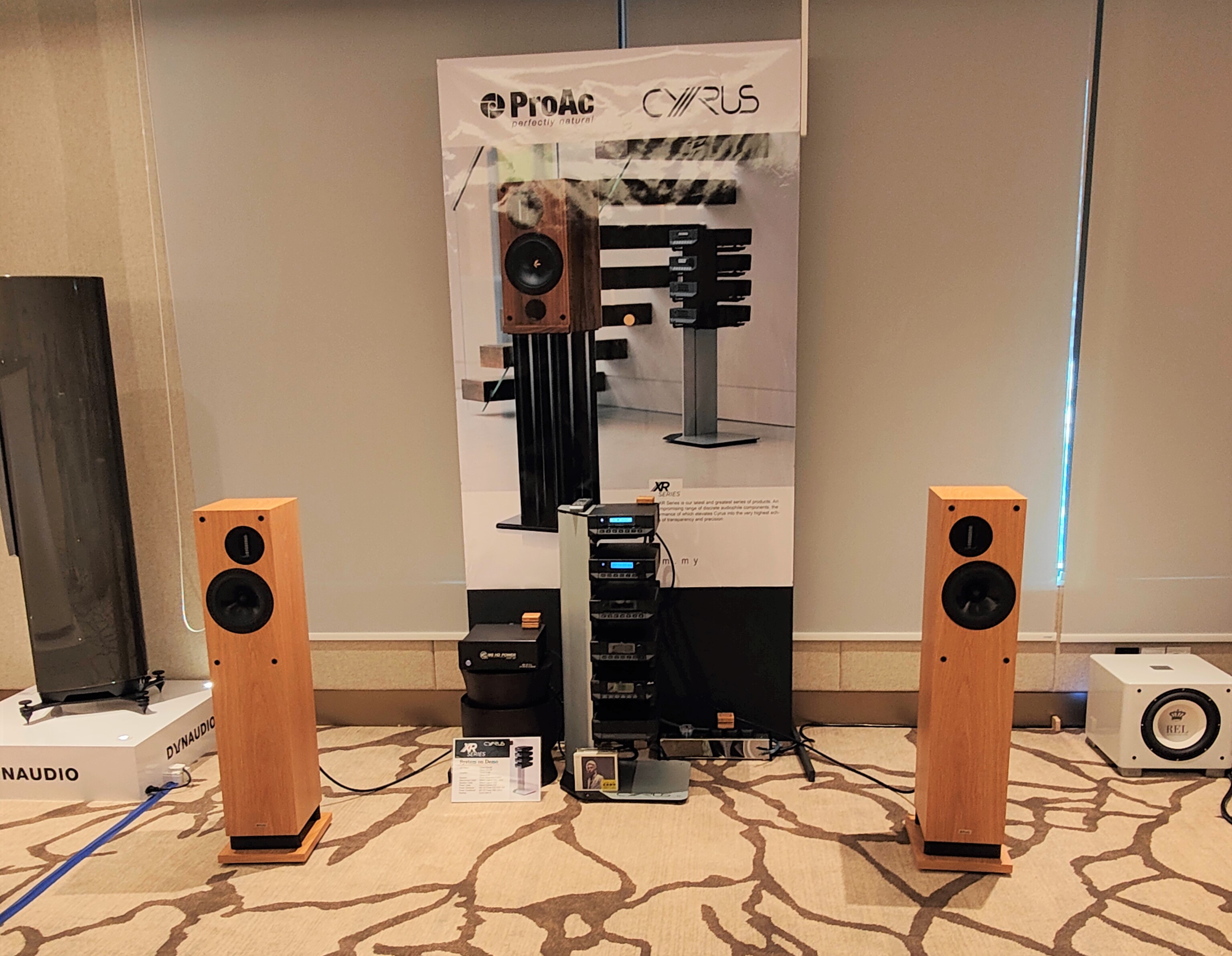
ProAc + Cyrus system

Center Circle Audio introducing Avantgarde speakers & HiFi Rose amongst the system

HiFi Choice brought many systems with them to the show, but this B&W + Michi system truly shines

Dali speakers also featured

Sonus Faber speakers too

Stenheim speakers with DCS hi-res player, unfortunately the hotel wifi glitch prevented this system from fulfilling it's hi-end performance 

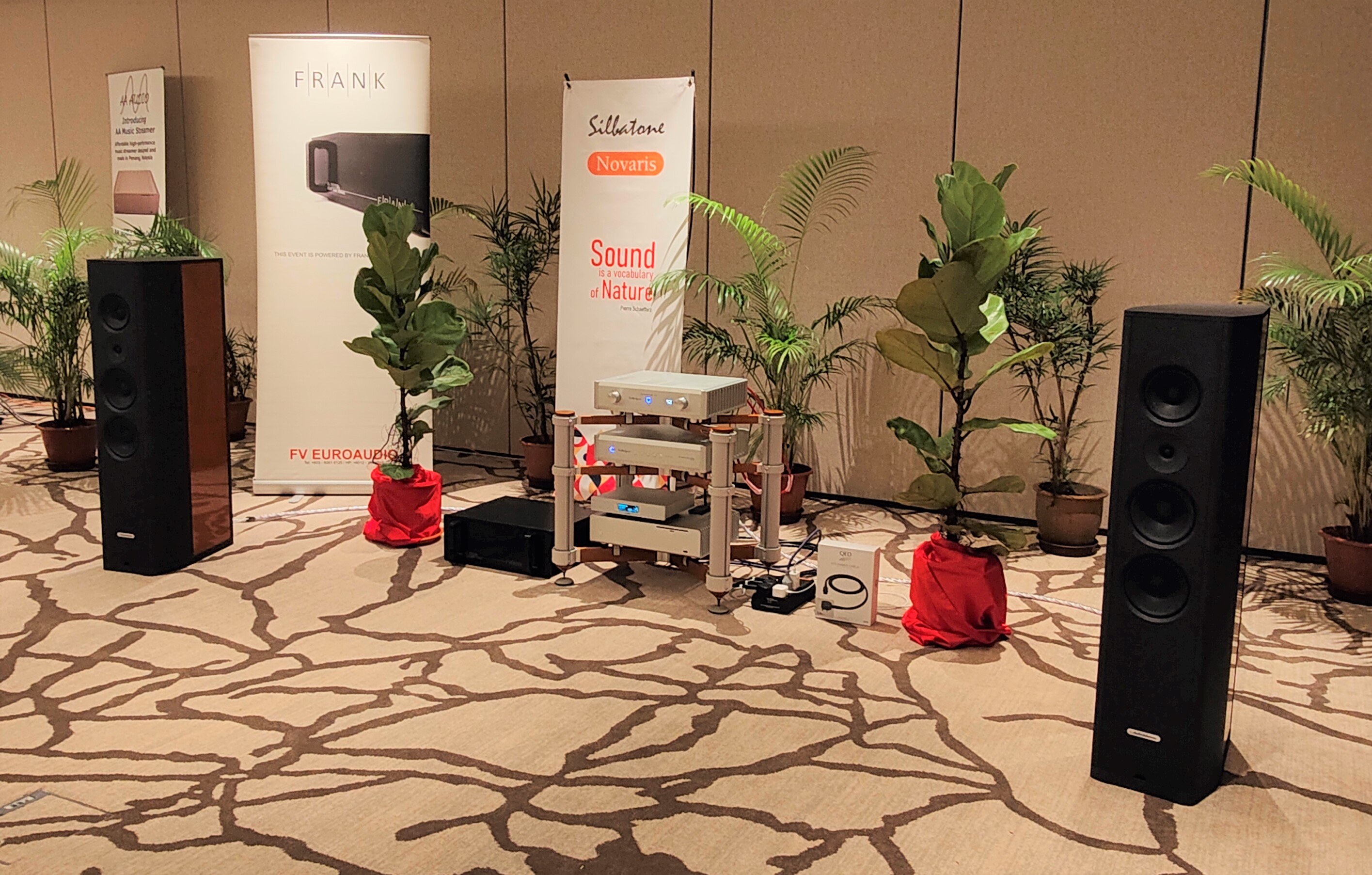
Also present were Silbatone tube amps, Novaris PLC & Frank Ultra bank here, presented by Frankie Voon himself, and sometimes Peter Ting 

AA Audio streamers, developed locally by Dr Anwar Ali, former Intel engineer

Inside the AA Streamer

Tech X displayed desk top speakers & E1 Personal Audio presented much head fi 

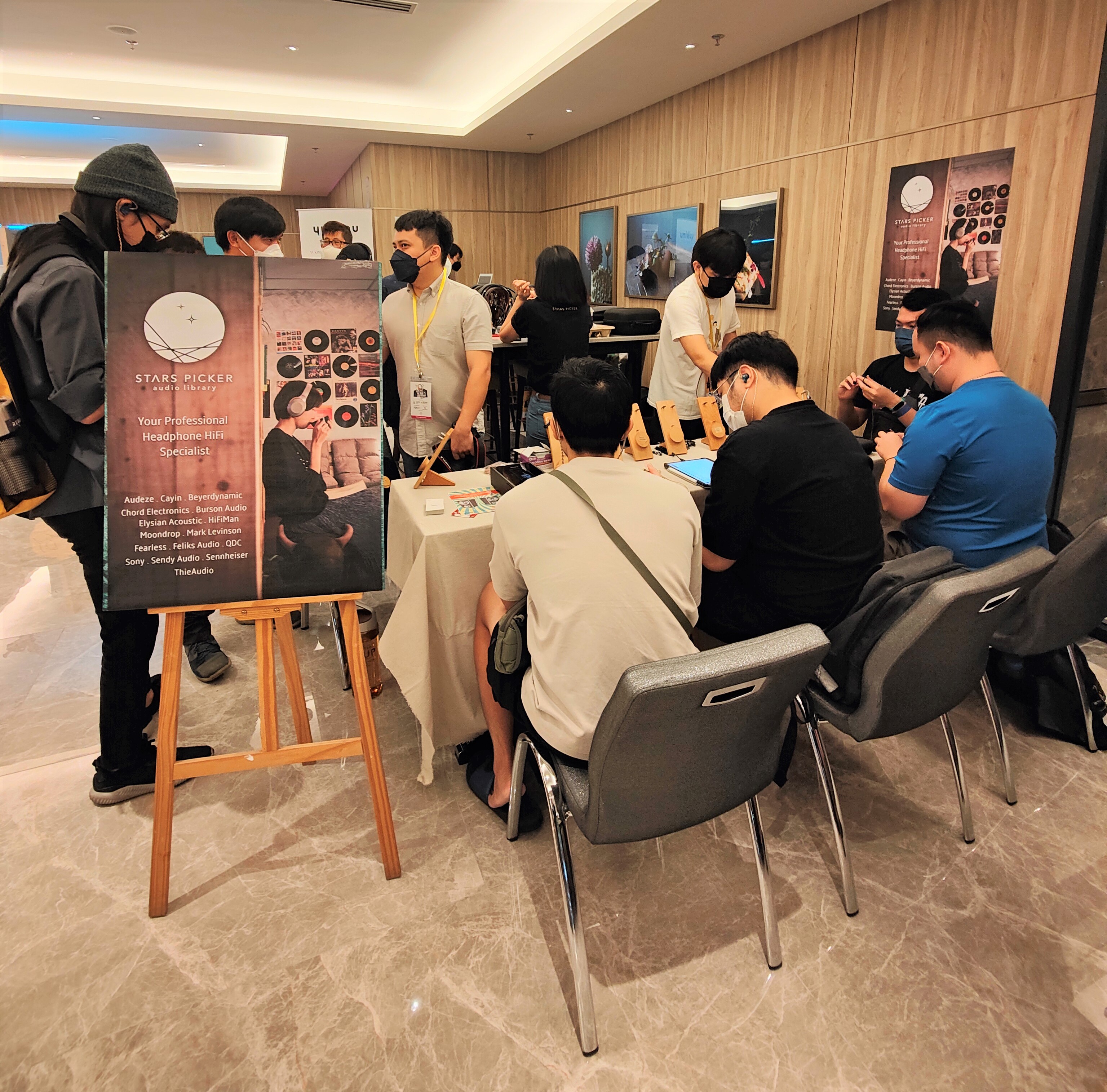
Stars Picker booth was busy all with many head fi fans checking out the latest products

Double GT Audio displayed some of their gears plus offers cash & carry too 

Fine SPL display their locally designed speakers which are made in China

AFC Top HiFi has Xavian speakers & other hifi brands on demo

Hi-Way Laser was displaying all ATC system

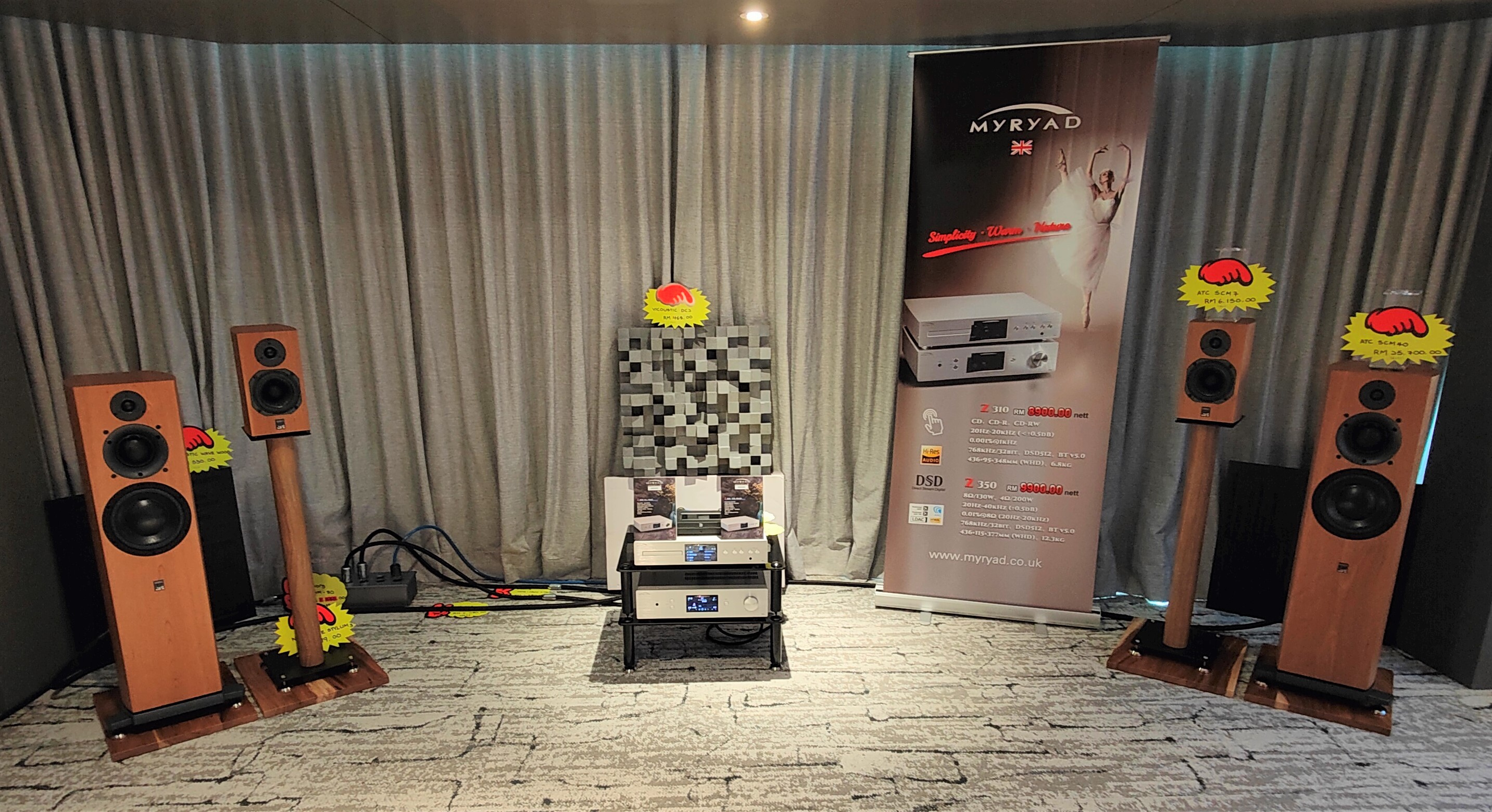
Hau HiFi demo-ed ATC speakers with Myryad electronics

Hau HiFi also had this Ultra Short Throw project by CHiQ on display, which I found the picture quality to be rather impressive

Choy Audio showcased Yaqin amps mostly

I kinda like the looks of this tube amp, especially the meters

CCY Engineering had their impressive sounding locally designed & made amps on demo with Yamaha speakers 

Quantum Acoustics show cased their AV system with excellent surround system

Caruso Vinyl had a booth selling software to feed audio systems

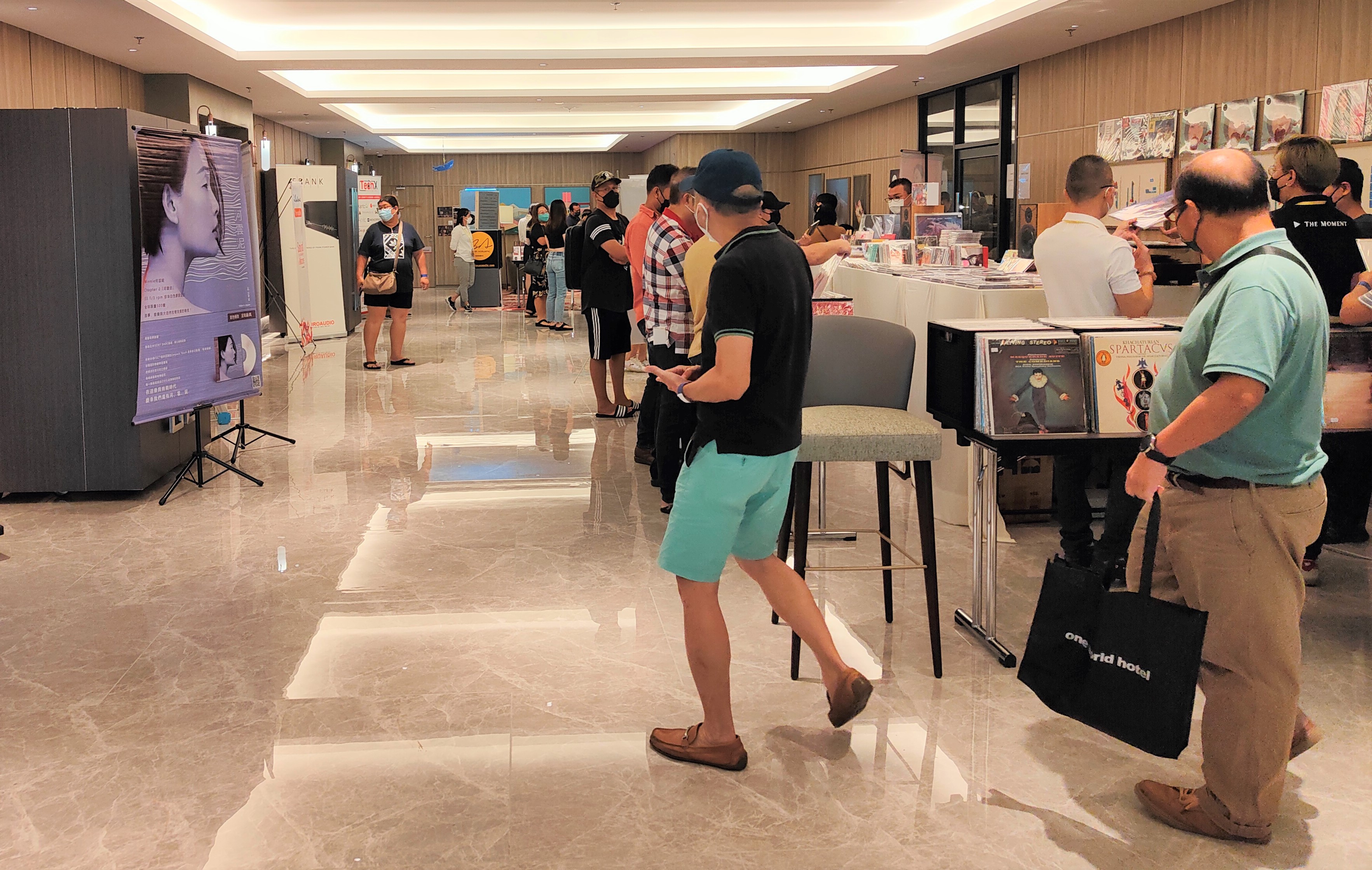
At the 2nd floor main foyer, there were three levels of AV demos, including the level 7 & 22.

Overall, the show was well attended and the Penang State Development Authorities had some pretty ambitious metrics for the show. The Northern AV Show will be back next year, bigger & better! 

June 13, 2022

The Northern AV Show Update


The Northern AV Show, held at Ascot Gurney Hotel Penang over the weekend has ended it's run. Stay tuned for show report coming soon!